
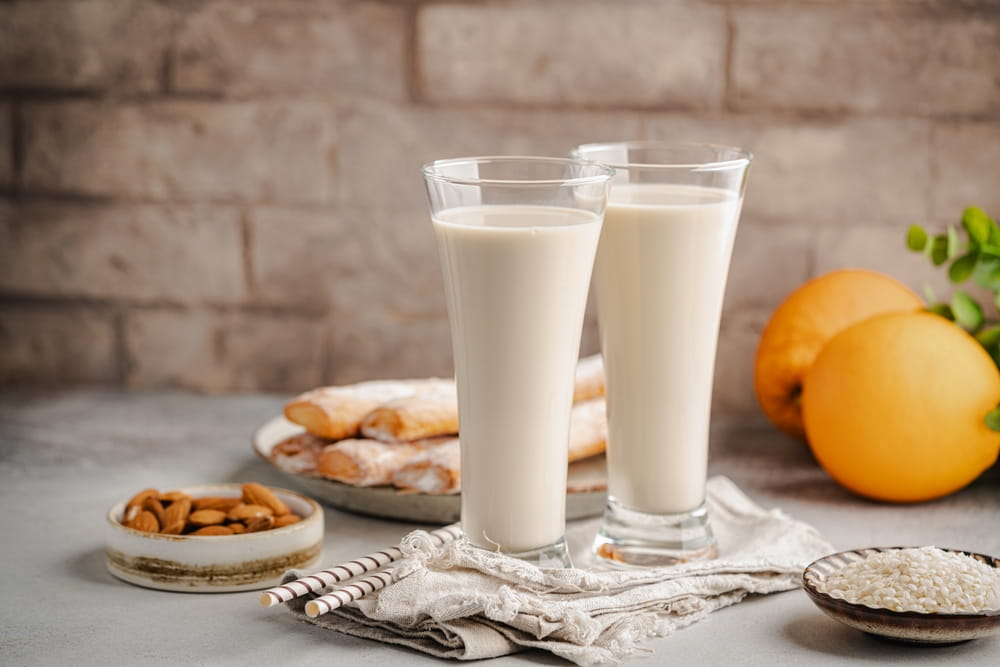
- Horchata is a cold, sweet, plant-based Valencian drink made from chufa, or tiger nuts, water and sugar.
- The Spanish version is different from Mexican horchata: horchata de chufa is made from tiger nuts, not rice or milk.
- It is naturally dairy-free, lactose-free and caffeine-free, and is especially popular in Valencia and Alicante during hot weather.
- In Alicante, good places to try horchata include Horchatería Azul, Kiosko Peret, Horchatas Granizados Helados and Helados Verdú.
Planning a summer stay in Alicante? Choose a comfortable base close to the Central Market, the Old Town, café streets and the city’s best places for horchata.
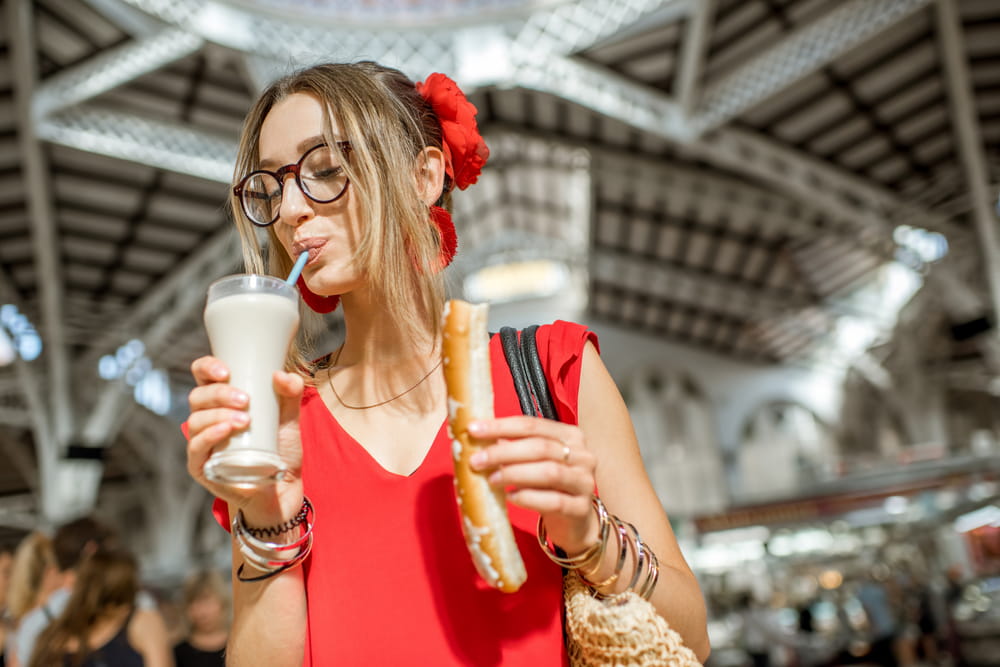
If you spend a summer anywhere between Valencia and Alicante, you’ll eventually be handed a small glass of something pale, milky-looking and ice cold, usually with a straw and a strange little pastry on the side. That’s horchata. And once you try it properly, on a hot terrace with the sun already doing its worst before 11am, you’ll understand why locals treat it less like a drink and more like a survival tool.
This is everything you need to know about it: where it comes from, what’s actually in it, how it compares to the Mexican drink with the same name, and where to find the good stuff once you’re in Alicante.
A Drink With a Thousand-Year Backstory
Horchata’s story starts in Alboraya, a small town just north of Valencia city, where the soil turned out to be perfect for growing chufa, a little knobbly tuber also known as the tiger nut. Tiger nuts aren’t actually nuts at all. They’re the root of a wetland sedge plant, and people have been eating them since ancient Egypt, where they were prized enough to end up buried alongside pharaohs.
The chufa made its way to Spain during the Islamic period, and by the 13th century there are written references to «llet de xufes», tiger nut milk, the direct ancestor of the drink you’ll be sipping today. Which country invented horchata? That one depends who you ask. The Egyptians were drinking something similar millennia earlier, but the horchata we know, the one that’s inseparable from Valencian summers, was born right here on this stretch of Spanish coast.
There’s also a beautiful legend attached, and it’s too good not to repeat. Supposedly, a young girl from the Valencian countryside once offered a cold, sweet drink to King Jaume I. He asked what it was, and she answered «Es llet de xufa», it’s tiger nut milk. The king, apparently blown away, replied «Això no és llet, això és or, xata!», meaning «This isn’t milk, this is gold, my dear!» And that, so the story goes, is where the name horchata comes from. Historians will tell you it more likely derives from the Latin word for barley, hordeata, but honestly, the king story is the one everyone actually tells.
Today the drink is protected by its own Denominación de Origen, Chufa de Valencia, which means only tiger nuts grown in this specific region, under specific conditions, can legally be labelled as the real thing. And who are we to argue?
✨Club Alegria
Sign up for our club and enjoy its benefits:
✔10% exclusive discount
✔Welcome amenity: complimentary water and coffee capsules
✔Check-out at 1:00 PM or Early check-in at 2:00 PM (optional)
What Is Spanish Horchata Made Of?
The ingredient list is short and honest: soaked tiger nuts, water, sugar, and often a bit of cinnamon or lemon peel to round out the flavour. That’s it. No dairy, no eggs, no artificial anything in a proper batch. The tiger nuts are hydrated, ground, mixed with water, and strained until you’re left with a smooth, milky liquid that looks a lot like, well, milk, but tastes nothing like it.
Because there’s no dairy involved, horchata is naturally lactose-free and gluten-free, which makes it one of those rare traditional drinks that a huge range of people can actually enjoy without a second thought.
Snorkeling in Alicante, Spain: The Best Beaches, Coves, and Bays + Essential Tips
What Does Horchata Taste Like?
This is the question everyone asks before their first sip, and it’s genuinely hard to answer with a comparison, because there isn’t really anything else quite like it. It’s sweet but not sugary-sweet, nutty without tasting like actual nuts, and there’s a faint earthiness underneath that keeps it from feeling like candy. Some people pick up notes of almond, others get more of a subtle vanilla thing going on, especially if cinnamon was added during preparation.
Does horchata taste like eggnog? Not really, though the comparison comes up a lot because of the pale colour and creamy texture. Eggnog is heavy, boozy-adjacent, and built around dairy and egg. Horchata is light, plant-based, and served ice cold rather than warm and spiced. If eggnog is a cosy blanket, horchata is a cold shower on a 35-degree day.
Exploring Alicante café by café? Make the day easier with useful hotel services such as airport transfer, parking, breakfast delivery or extra cleaning.

Why Do People Drink Horchata, and When?
Ask anyone in Alicante and the answer is simple: because it’s hot, and this actually works. Horchata is hydrating, refreshing and just sweet enough to feel like a treat without being sickly. Locals drink it any time from mid-morning through late evening, and in Alicante specifically, some horchaterías will tell you people order it for breakfast just as often as they order it after dinner. There’s no real wrong time. If the temperature is above 25 degrees, it’s horchata o’clock.
Is horchata a popular drink in Spain? Enormously, but mostly regionally. It’s the signature drink of the Valencian Community, Alicante included, and while you’ll find bottled versions in supermarkets across the whole country, the fresh, artisanal stuff is really a Valencia-and-Alicante thing. Ask for it in Madrid or Seville and you’ll get a shrug and a supermarket carton, not the real experience.
The Two Types of Horchata and How to Explain It to Someone Who’s Never Heard of It
Here’s where it gets a little confusing for first-timers, especially anyone arriving from the US or Latin America. There are two completely different drinks sharing the same name.
Spanish horchata (horchata de chufa) is the tiger-nut based drink from Valencia, described above. Nutty, plant-based, served ice cold, no dairy.
Mexican horchata is a completely different recipe, usually made from rice, milk or a milk substitute, cinnamon and sometimes vanilla. It’s more common outside Spain and is what most people in the US actually picture when they hear the word «horchata».
So if you’re trying to explain horchata to someone who’s never had either version, the simplest honest answer is this: it’s a cold, sweet, milky-looking drink from Spain made from tiger nuts, not milk, not rice, and it tastes closer to a light almond milk than anything else they’ve probably tried. That usually does the trick.
The 10 Best Ice Cream Cafés in Alicante: A Sweet Journey Through Flavor, Tradition, and Innovation
Is Horchata a Healthy Drink?
Reasonably, yes, especially compared to a lot of other summer drinks. Tiger nuts bring a fair amount going for them nutritionally. They’re rich in fibre, which helps digestion, and they contain oleic acid, the same fatty acid found in olive oil, which is generally associated with supporting healthy cholesterol levels rather than raising it. Horchata itself contains no cholesterol.
Does horchata have caffeine? No, none at all, which makes it a good pick if you want something cold and a little indulgent-feeling without the jittery aftermath of an iced coffee.
Calorie-wise, it sits somewhere in the middle. A typical glass is not the diet-friendly option on the menu, mostly because of the added sugar, but it’s not outrageous either, generally landing lighter than a milkshake or a sugary soda of the same size. If you’re watching sugar intake, most horchaterías and supermarkets also sell a sugar-free version these days.
And now for a really important question: does horchata help with a hangover? There’s no scientific backing for it as a cure, but plenty of Spaniards will swear by a cold glass the morning after. It’s hydrating, mineral-rich, easy on the stomach and completely alcohol-free, so at the very least it won’t make things worse, and it might genuinely help you feel human again.
Fishing in Alicante: Locations, Licences, Rules and Local Know-How
A Fun Fact Worth Knowing
Here’s one that tends to surprise people. Every year on the first Wednesday of July, Alboraya, the birthplace of horchata, throws an entire day dedicated to it, Día de la Horchata, with free glasses handed out around town. It’s been going since the 1960s, when the historic Horchatería Daniel started the tradition of giving away free glasses to visitors during the town’s summer festival, and it’s still running today.

The Classic Recipe and the Slushier Version
If you want to try making it at home, the traditional method is simple, if a little time-consuming.
Classic horchata: Soak tiger nuts in water for around 12 hours. Blend them with fresh water until you get a rough paste, then strain everything through a fine cloth or sieve to remove the pulp. Sweeten to taste, add a strip of lemon peel and a cinnamon stick if you like, then chill for several hours before serving over ice.
Horchata granizado: This is where things get genuinely fun. Take the same base and freeze it into a rough, icy slush, either in an ice cream maker or by freezing it and scraping it with a fork every hour or so until it turns crystalline. The result is somewhere between a drink and a dessert, intensely refreshing and honestly one of the best ways to survive an Alicante August afternoon. Granizado de limón, the lemon version, is horchata’s biggest rival on every menu in the city, and honestly, ordering both and going back and forth between the two is a completely acceptable life choice.
What Food Goes Well With Horchata?
The classic pairing, and honestly the only one that really matters, is the fartón, a long, soft, sugar-dusted pastry that’s practically designed for dunking. Beyond that, horchata pairs nicely with coca, a flat Valencian pastry that comes in both sweet and savoury versions, and with pretty much any light, not-too-sweet dessert. It’s less at home next to something heavy or greasy, and much happier next to something simple that lets its own flavour do the talking.
Where to Try Horchata in Alicante
Alicante isn’t Alboraya, but it takes its horchata seriously, and a handful of local spots have been perfecting it for generations.
Horchatería Azul is the name everyone in Alicante mentions first. Tucked near the Central Market on Calle Calderón de la Barca, this tiny, tiled, nearly century-old shop has been run by the same family since the 1930s, and the queue outside in summer tells you everything you need to know. Their classic horchata, homemade lemon granizado and ice-cream-filled buns have earned them a Guía Repsol «Solete» award for good reason.
Kiosko Peret, right on the Explanada de España, has been serving horchata for over a hundred years and has the guest list to prove it, from Spanish royals to Ernest Hemingway. It’s less about hidden charm and more about sitting on one of the city’s most famous promenades with a proper horchata in hand, which honestly is exactly what a holiday should feel like.
Horchatas Granizados Helados has been making horchata and granizados the traditional way for more than four decades, using only Denominación de Origen chufa. If you want a no-frills, proper artisanal glass without the tourist crowds of the seafront spots, this is a solid local pick.
Helados Verdú, on Calle San Mateo, regularly makes local «best of» lists alongside Azul and Peret, and is a good option if you want to combine your horchata stop with some genuinely excellent artisanal ice cream.
Bonus day trip: if you really want to go to the source, the town of Jijona, about half an hour inland from Alicante and already famous for its turrón, is home to several artisanal ice cream and horchata producers, including long-running family workshops that have been perfecting frozen treats for decades. Worth the drive if you’re already exploring the province.
Every Summer
Every summer, once the temperature climbs past whatever number stops feeling reasonable, our team goes on a fairly serious horchata pilgrimage around Alicante, and we’re always happy to share our current favourite spot with anyone visiting the area, whether you’re here on holiday or coming to look at properties with us. It’s a small thing, but it’s exactly the kind of small thing that makes living on this coast so good. So if you’re in town, come say hi, and we’ll point you toward the nearest cold glass.
Turning a horchata walk into a full Alicante weekend? Stay in the city, explore cafés and promenades on foot, and come back to a comfortable room after sunset.
FAQ
What is Spanish horchata made of?
Spanish horchata, or horchata de chufa, is made from soaked tiger nuts, water and sugar, often with a little cinnamon or lemon peel. A proper traditional batch contains no dairy and no eggs.
Is Spanish horchata the same as Mexican horchata?
No. Spanish horchata is made from chufa, or tiger nuts, and is associated with Valencia and Alicante. Mexican horchata is usually made from rice, milk or a milk substitute, cinnamon and sometimes vanilla.
Is horchata lactose-free?
Yes. Traditional Valencian horchata is naturally dairy-free and lactose-free because it is made from tiger nuts and water rather than milk.
When do people drink horchata in Alicante?
In Alicante, people drink horchata from mid-morning through late evening, especially in warm weather. Some horchaterías serve it at breakfast as well as after dinner.
Where can you try good horchata in Alicante?
Popular places mentioned in the article include Horchatería Azul, Kiosko Peret, Horchatas Granizados Helados and Helados Verdú.