
Ready to plan your own cultural escape? Check dates and choose the room that suits your stay.
Alicante Is Not Just a Beach (Sorry, Beach)
Ask ten people what they do in Alicante and nine will give you the same answer: lie down. Sun, sand, a cold drink, repeat. We don’t blame them. The light here is ridiculous, the sea stays warm well into October, and the city enjoys around 300 sunny days a year, which does tend to dull the urge to go and stare at old stones.
But we live here, we sell homes here, and we spend an embarrassing amount of our free time wandering around churches and markets, so we can tell you the beach is the least interesting thing about the place. Alicante has been a port for well over two thousand years. Iberians, Romans, Moors, Castilians, Genoese refugees and a long line of merchants all left something behind. Most of it sits within a short walk or a short train ride.
What follows is our personal top ten. It isn’t a ranking, more a loose route from the easy stuff to the slightly more ambitious. You can do all of it in a long week, or pick three and come back in spring. Plenty of the people we know did exactly that, and a few of them ended up buying a flat. We’ll get to that.
Stories in Stone
Start with the oldest layer. Alicante keeps its history in plain sight, stacked on a hill right above the seafront, which makes your planning pleasantly easy.
1. Santa Bárbara Castle: Go Up Slowly, Come Down Slower
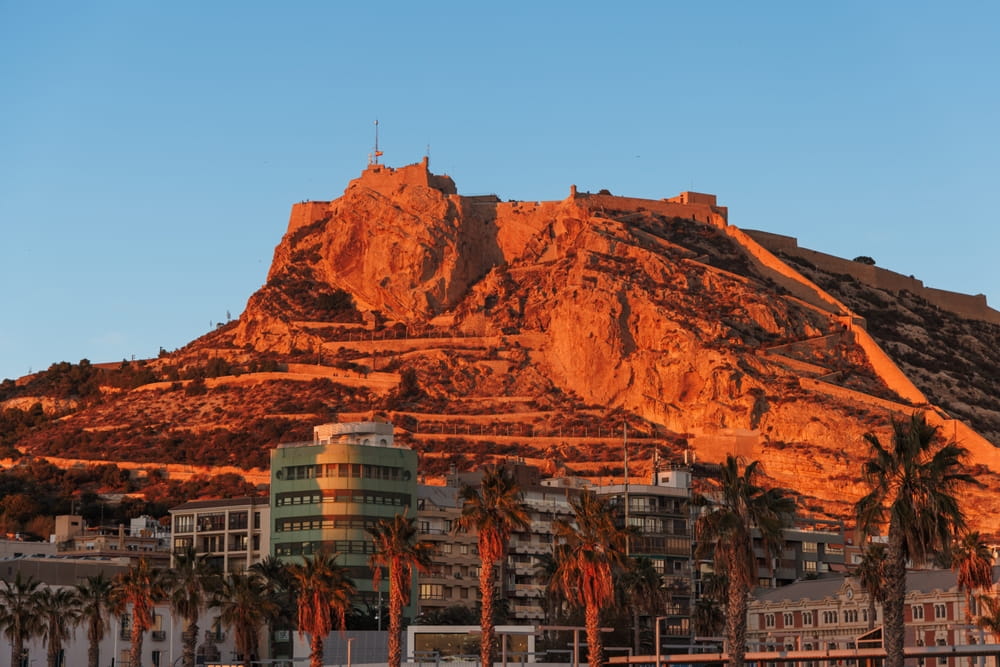
The castle crowns Mount Benacantil, 166 metres above the water, and you can see it from nearly everywhere in the city. That is on purpose. A Muslim fortress stood here from around the ninth century, Castilian troops took it in 1248 on the feast day of Saint Barbara, and the name stuck. Later centuries added bastions, barracks and a few rooms that were far from cheerful for the prisoners who ended up in them.
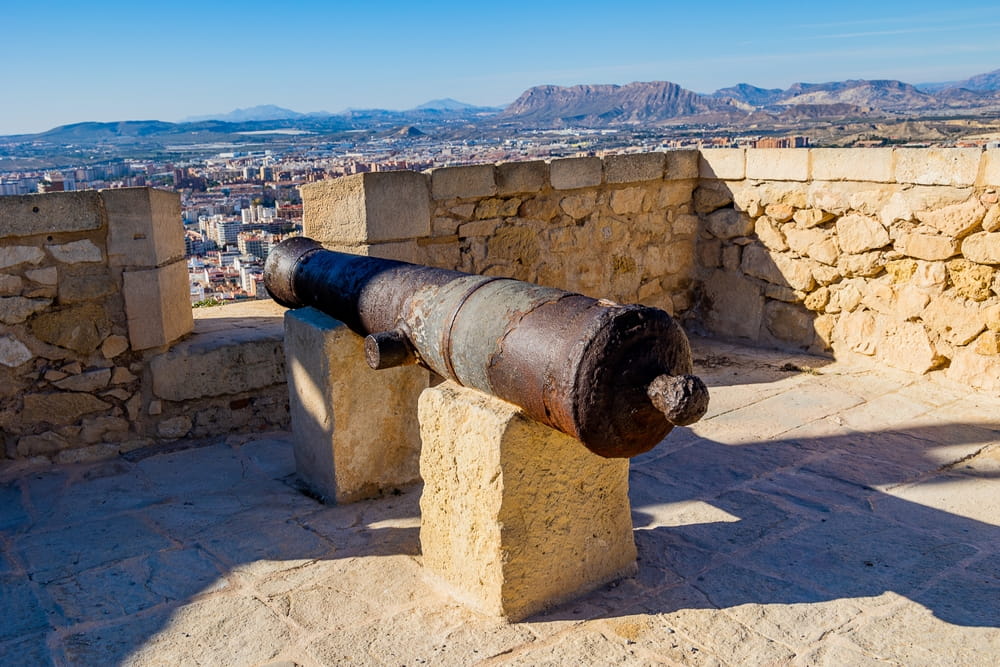
Entry is free. A lift cut straight through the rock starts near Postiguet beach, and it saves your knees on a hot day. If you have the energy, though, walk. The path winds up through pine and agave, and the city rearranges itself at every bend. Aim for late afternoon. The stone turns the colour of toast, the bay goes soft, and on a clear evening you can pick out the flat strip of Tabarca island far out at sea.
Look across the hill for the face in the rock. Locals call it «La Cara del Moro», the Moor’s Face, and everybody sees a slightly different expression. Inside the castle there is also a small city museum, worth twenty minutes if you like old maps and have nowhere to be. Bring water. Shade is scarce up there, and the sun does not negotiate.
2. Santa Cruz: Put the Map Away
The old quarter of Santa Cruz clings to the slope beneath the castle, and it makes satellite navigation completely useless. Streets turn into staircases without warning. Walls are painted ochre, pink, and a surprising amount of blue. Geraniums grow out of tins that once held olive oil. Somebody’s washing hangs across an alley, and somebody else’s cat has claimed the best step and won’t be moved.
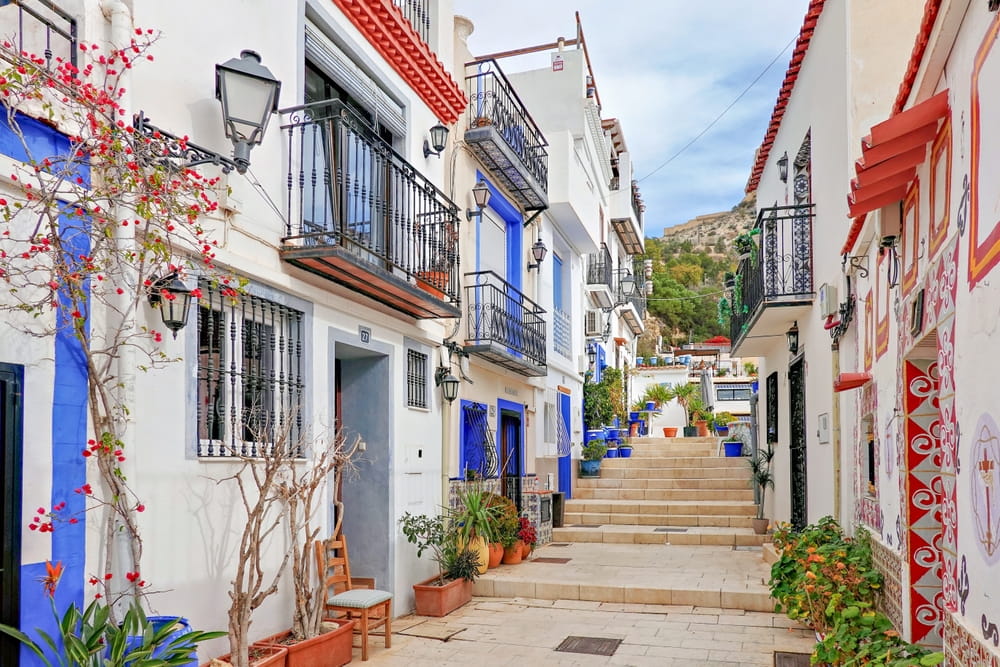
Photo: Veja / Shutterstock.com
Don’t chase a list of sights here. Wander. Stop when a doorway looks interesting, have a coffee on a tiny square, and listen to the small noises of a neighbourhood where almost nobody drives. The main lanes get a bit touristy. Two streets away it turns wonderfully ordinary. Be prepared for the reality that your calves will have strong opinions. Carrying the shopping up is another story altogether.
3. Two Churches and One Quiet Hour
Come down from the hill into the Old Town proper and you meet the Basilica of Santa María, the oldest parish church in the city. Building began in the fourteenth century on the site of a former mosque, in a sober Levantine Gothic with thick walls and not much fuss. The Baroque façade arrived in the eighteenth century, and it looks a little like a showy relative who turned up late to a family dinner.
A short walk away stands the Co-Cathedral of San Nicolás de Bari, a seventeenth-century building that is plain outside and pleasantly bright within, with a blue dome and a white cloister that feels five degrees cooler than the street. The «co» in the name is there because the diocese is shared with Orihuela, so Alicante has a co-cathedral rather than a cathedral of its own. Locals shrug about it. Visitors tend to ask.
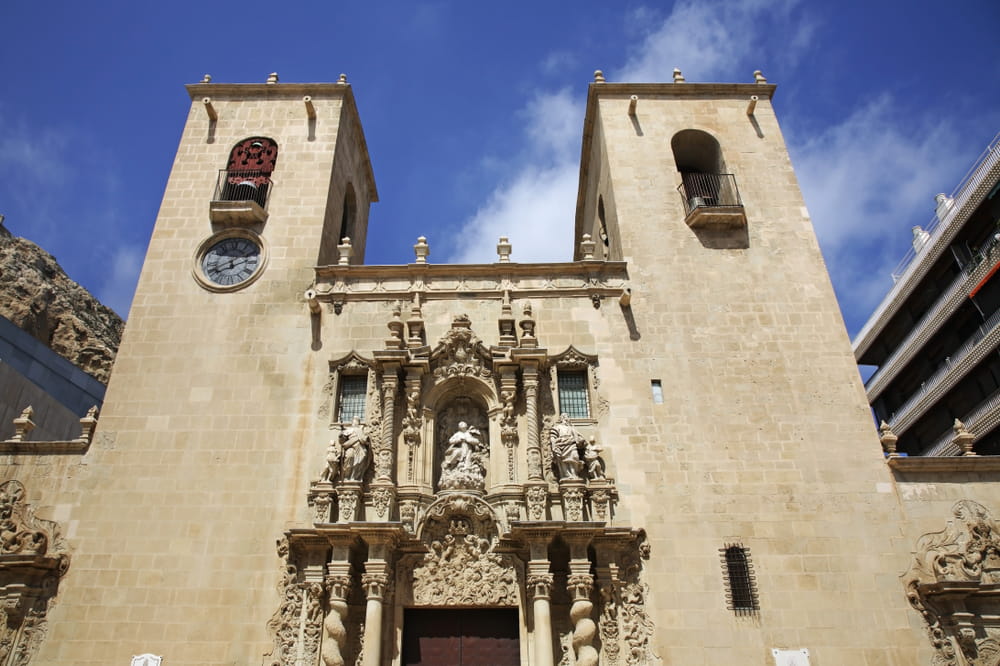
Both churches are best visited outside service times, and both appreciate modest dress. Go in the late morning, sit for ten minutes and let the city noise drain out of your head. This is the part of the trip where you are officially allowed to do nothing, and nobody will judge you. Afterwards, finish on the Explanada de España, the seafront promenade paved with roughly six and a half million marble tiles laid out in waves. Caution: some people say it makes them seasick)
Alicante’s Top Sights: What to See and Why This City Is Truly Special
Museums That Earn Their Ticket
Alicante is not London and doesn’t pretend to be. The museums are mid-sized, well curated and usually uncrowded, which is exactly how most of us like our culture.
4. MARQ: Where the Past Is Laid Out Properly
The Provincial Archaeological Museum, known as MARQ, won the European Museum of the Year Award in 2004, and that was no fluke. It occupies a former hospital building, and the designers wisely let the architecture lead instead of fighting it. Rooms are dark, displays are clever, and the story runs from prehistory through the Iberians and Romans to the medieval city without once feeling like a school trip.
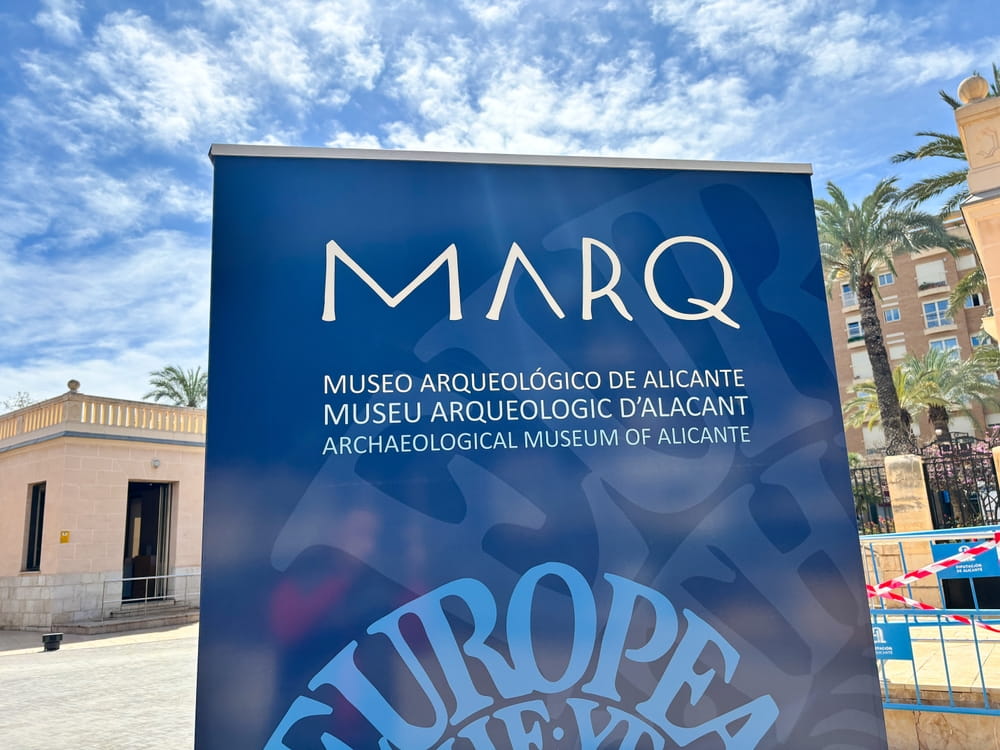
Photo: Civil / Shutterstock.com
Our favourite part is the Iberian and Roman material, much of it pulled from sites around Alicante, including the ancient town of Lucentum, whose remains lie on a low hill by the sea in the Albufereta district. Allow two hours.
5. MACA: Picasso, Dalí and a Baroque House
The Museum of Contemporary Art lives in the Casa de la Asegurada, a late seventeenth-century building that began as a granary and went through several lives before becoming a gallery. The heart of the collection came from Eusebio Sempere, an artist from the province, who left his private holdings to the city. It includes names that make you do a double take on the wall of a small museum: Picasso, Miró, Dalí, Chillida.
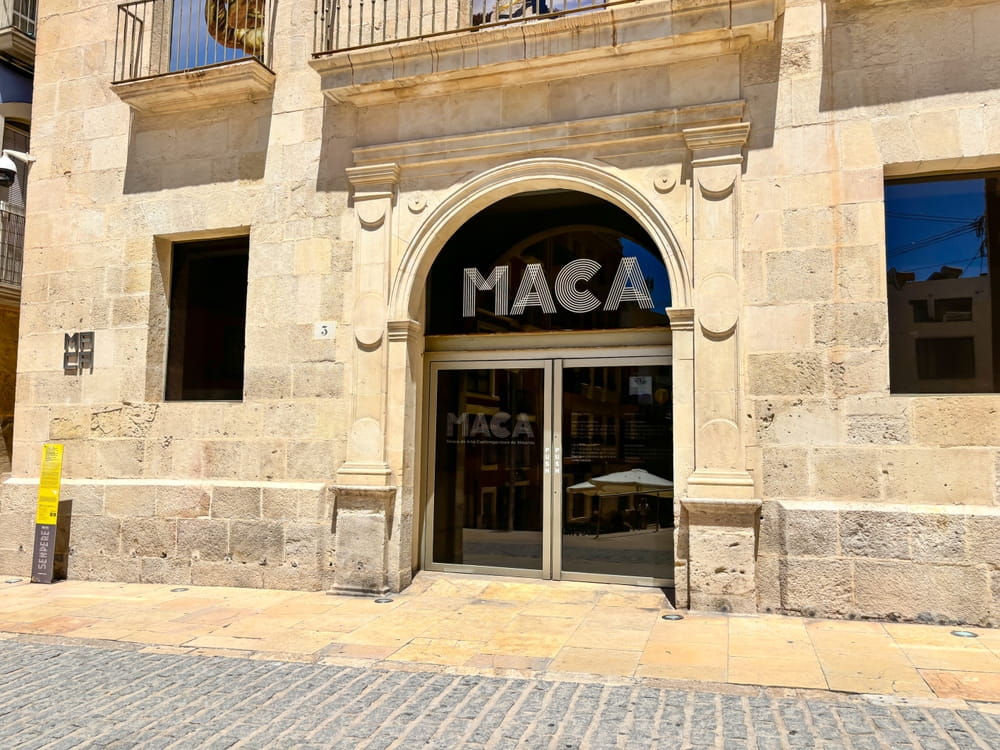
It’s a compact place, and that is the point. You can see it properly in an hour and still make lunch. Entry has traditionally been free, though policies shift, so a quick look at the museum’s website saves any grumbling at the door.
Culture You Can Eat, Hear and Occasionally Feel in Your Chest
6. The Central Market and a Slow Tapas Crawl
The Mercado Central opened in 1922, a modernist hall with high ceilings and a great deal of natural light, and it still works as a proper market. Not a souvenir shop. Fishmongers shout, butchers chop, elderly ladies argue politely over tomatoes. Go in the morning, before 1pm, when the stalls are at their best.
Buy something odd. Mojama, for instance, which is salt-cured tuna sliced paper thin and eaten with almonds and a splash of olive oil. Or a small bag of local almonds and a wedge of cheese. If you’re here in winter, look for turrón. Alicante makes the hard version, the town of Jijona makes the soft one, and feelings run high on both sides.
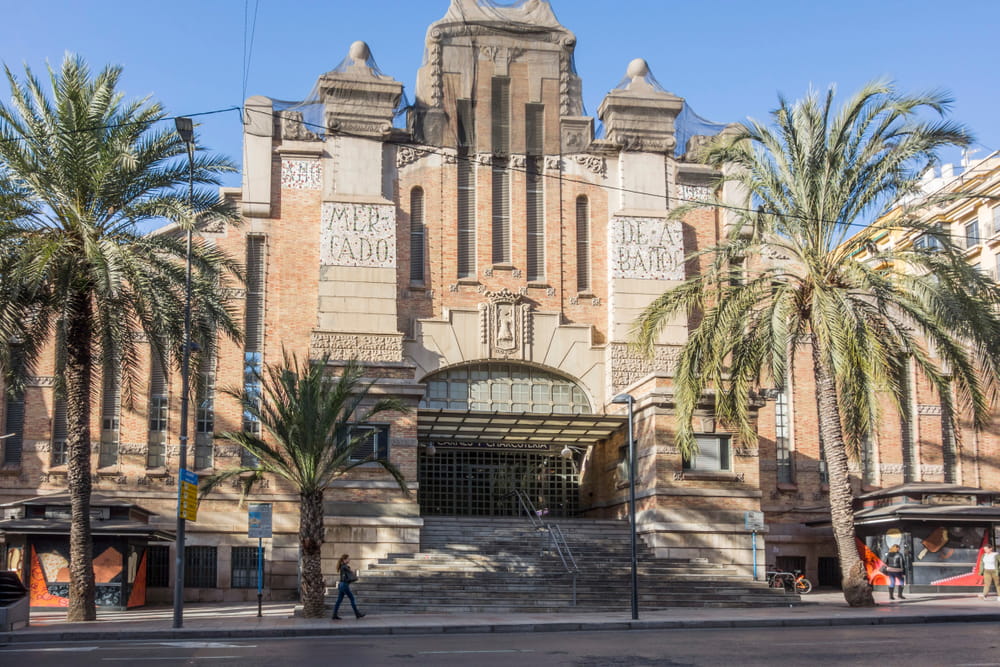
Photo: joan_bautista / Shutterstock.com
Then walk. The streets around the market and nearby Calle Castaños fill up with small bars by midday, and a slow tapas crawl is the cheapest cultural education the city has to offer. Order something local, perhaps a Monastrell red or a cold Moscatel. If you spot a bottle of Fondillón, the aged dark wine that made Alicante famous centuries ago, try a glass. It tastes like a very distinguished raisin, and we mean that as praise.
7. Hogueras de San Juan: When the City Sets Itself on Fire
If your dates are flexible, aim for the night of 24 June. The Hogueras de San Juan, Alicante’s biggest festival, run from 20 to 24 June and revolve around enormous sculptures of wood, cardboard and paint, built over months by neighbourhood groups and burned to the ground in a single night. Some people, seeing this for the first time, cannot even hold back their tears as they are overwhelmed by emotion.
Approximately at 2pm comes the mascletà in Plaza de los Luceros, a concentrated barrage of firecrackers built for rhythm rather than light. It is loud in a way you feel in your sternum. Stand back a little if you’re sensitive, and bring ear protection for children. In the evenings come the parades, with women and girls in embroidered Valencian dress, brass bands and food stalls on every corner. One practical warning: hotels fill up and prices jump, so book months ahead.
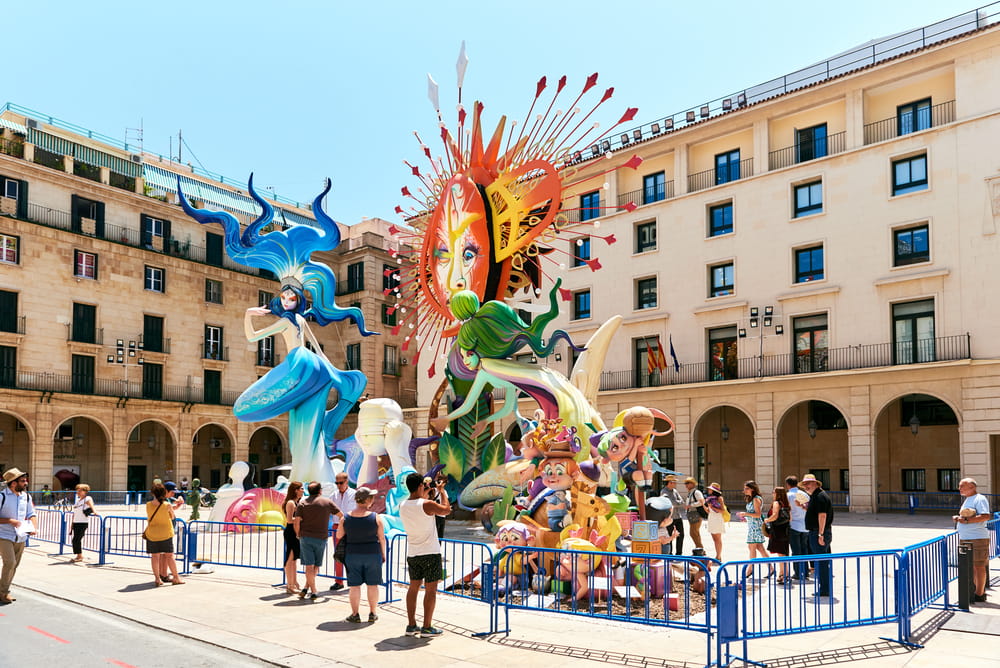
Photo: Alex Tihonovs / Shutterstock.com
Not travelling in June? Spring has its own noisy offering. The Moors and Christians festival in Alcoy, about an hour inland, fills the streets in the last week of April with costumed armies and a staged battle that has been repeated for centuries. Different mood, same love of gunpowder.
Stay at Alicante Smart Hotel and enjoy a 10% discount, plus thoughtful extras to make your city break even more comfortable.
✨Club Alegria
Sign up for our club and enjoy its benefits:✔10% exclusive discount
✔Welcome amenity: complimentary water and coffee capsules
✔Check-out at 1:00 PM or Early check-in at 2:00 PM (optional)
Day Trips Worth the Fuel (or the Ticket)
8. Elche: Two UNESCO Treasures in a Town Most People Skip
Elche is twenty minutes from Alicante by commuter train, and for some reason many visitors fly straight past it on their way somewhere else. That’s their loss. The Palmeral of Elche is a historic grove of around two hundred thousand date palms, first laid out by the Moors and tended ever since, and it has been a UNESCO World Heritage Site since 2000. Walking through it feels like stepping into another country. Light falls in green stripes, old irrigation channels still run between the trunks, and the temperature drops a few degrees.
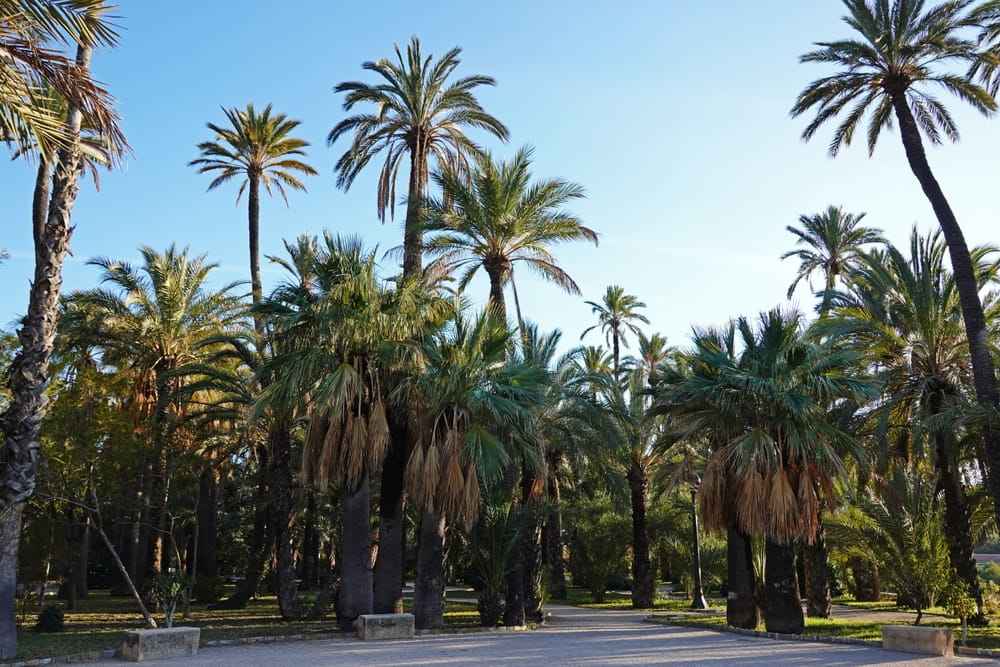
Head to the Huerto del Cura, a garden of palms and cacti where the Imperial Palm, a seven-armed tree more than a century and a half old, has become a local celebrity. Then find the Basilica of Santa María, because this is where the Misteri d’Elx takes place each year on 14 and 15 August. It is a medieval sacred drama, sung in Valencian rather than spoken, and UNESCO recognised it as a masterpiece of intangible heritage in 2001. The people of Elche take it very personally. If you manage to get a seat, you’ll remember it for a long time.
Add the Arab Baths, and then order arroz con costra for lunch, an Elche speciality of rice baked in the oven under a crust of beaten egg. It is one of the more satisfying things you can do with a spoon.
9. Tabarca: A Walled Island With a Strange Story
An hour by boat from Alicante port lies mysterious Tabarca, the only inhabited island in the Valencian region and, as far as we know, the only walled island anyone will ever ask you to circle before lunch.
Its history reads like a novel. Genoese families had lived for generations on the Tunisian island of Tabarka until corsairs captured many of them in the 1740s and enslaved them. King Charles III paid for their release and offered them an empty rock off the coast of Alicante, which he ordered fortified and renamed. The walls, the gates and a small church still stand, and the island has a quiet, faintly stubborn character as a result.
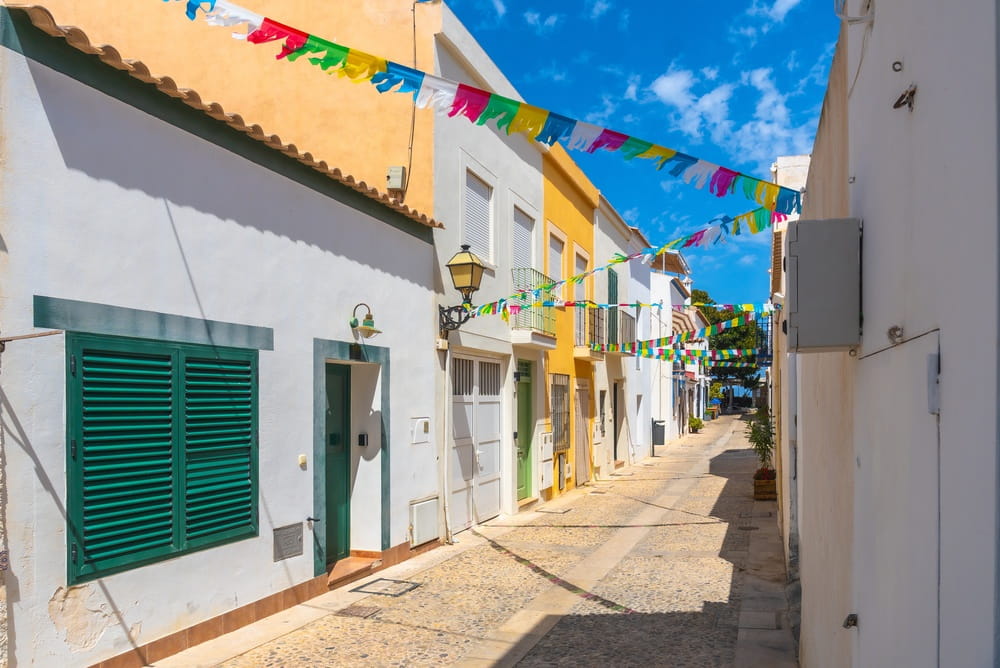
Walk the ramparts, snorkel in the marine reserve, the first in Spain, protected since 1986, and then do the one thing everybody does, which is order caldero, the local fish and rice stew. Go on a weekday if you can. Summer weekends turn the island into a very pretty queue.
10. Altea: White Walls, Blue Domes and a Lot of Artists
About forty-five minutes up the coast, the old town of Altea spirals around a hill topped by the church of Nuestra Señora del Consuelo, whose blue and white tiled dome catches the light from miles away. You arrive by car, tram or bus and climb through cobbled lanes lined with small galleries, ceramic workshops and cafés that consist of three tables and a good espresso machine. Painters and sculptors settled here decades ago, and the university’s fine arts faculty keeps the habit alive.
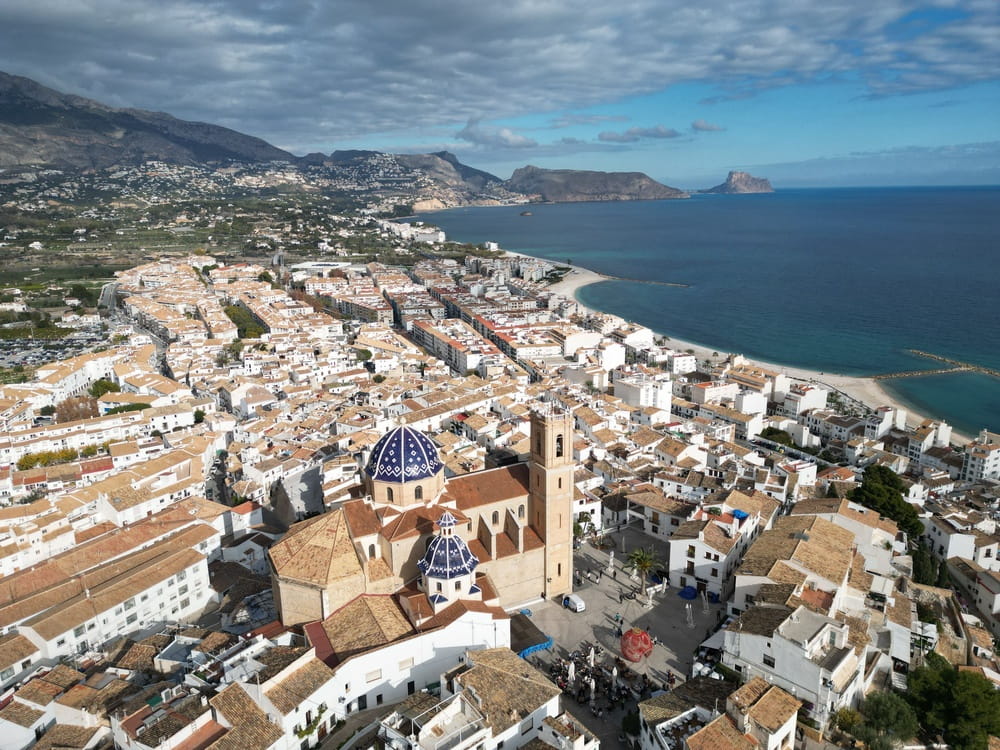
It is a touch more polished than other places on this list, and parts of it fill up with day trippers by noon. Go early, or stay for sunset, when the stone turns gold and the crowds thin. Sit on the square by the church, order a vermouth and listen to the neighbours greet each other in at least two languages, usually more.
Practical Notes From People Who Have Made Every Mistake
When to Come
Spring, from April to early June, and autumn, from late September to November, are the sweet spots. Days are warm without being punishing, and the light is flattering to everything, including your holiday photos. July and August are hot, often well above 30 degrees, and a castle climb at noon is a decision you can regret. Winter is mild and quiet, with sunny days that still feel pleasant in a jacket, which suits anyone who prefers museums without elbows.
Getting Around
The airport is about twenty minutes from the centre, with direct flights from a long list of European cities, so a long weekend is realistic. The centre itself is walkable. A tram runs up and down the coast, local trains reach Elche, and buses cover most of the rest. Wear proper shoes. Those cobbles are charming for photographs and unforgiving for flip-flops.
The Clock Works Differently Here
Lunch happens around 2pm and can last until 4pm. Dinner rarely starts before 9pm. Many museums close on Mondays, many shops shut in the afternoon, and some churches lock their doors at midday. Plan museums and churches for the morning, save the afternoons for lunch and a nap, and use the evening for the part of the city that wakes up when the sun goes down.
Winter in Alicante: Weather, Entertainment, and the Perks of a Winter Break on the Costa Blanca
A Three-Day Sketch for People Who Hate Planning
Day One: The Old Town
Market in the morning, then the two churches, a long lunch, and the climb up Santa Cruz. Reach the castle for sunset and let the view do what it does. Come down for a late dinner in the narrow streets and don’t check your watch.
Day Two: Elche
Take the early train, spend the morning in the palm grove and the Huerto del Cura, and book a table for arroz con costra. Return in the evening, tired in a good way. If it rains, swap Elche for MARQ and MACA and nobody loses.
Day Three: Tabarca
Catch a morning boat, walk the walls, swim if the water is kind, and eat caldero slowly. The boat back in the late afternoon is one of the best seats in the house.
When a Weekend Turns Into a Plan
A good number of people first arrived for a long weekend of exactly this sort, flew home, and then got oddly restless around November. If that sounds familiar, here is our honest take on where to look.
Old Town and the Centre
This suits people who like to walk everywhere and don’t mind trading space for character. Flats tend to be smaller and often older, sometimes with stairs and no lift, and you’ll hear the fiestas whether you want to or not. In return you get cafés downstairs, history at the door, and a daily life that doesn’t need a car.
Playa de San Juan and the Northern Coast
A wide, long beach, modern buildings, a tram line into the centre and a calmer pace in winter. This is where we often send families, and people who want the sea outside the window and the cultural city a short ride away. You’ll do your museum trips on weekends and your swimming in between.
Elche and the Countryside
Quieter, often with more space for the money, and a long way from the beach crowds. A car makes life easier here. You’ll also have a palm grove and a medieval mystery play as neighbours, which is not something every estate agent can promise.
Planning to explore Alicante and the surrounding area? Make the hotel your comfortable base for a cultural getaway.
Frequently Asked Questions
What are the best cultural things to do in Alicante?
Visit Santa Bárbara Castle, explore the Santa Cruz quarter and the Old Town churches, browse the Mercado Central, and make time for MARQ and MACA. If you’re visiting in June, the Hogueras de San Juan festival is another highlight.
How many days do you need to explore Alicante?
You can see many of the city’s main cultural sights over a long weekend. The article also suggests a three-day plan, with day trips to Elche and Tabarca.
Can you visit Santa Bárbara Castle for free?
Yes. Entry to the castle is free. A lift near Postiguet beach offers an easier way up, while the walking path provides views along the climb.
What are the best day trips from Alicante?
The article recommends Elche, Tabarca and Altea. Elche is reachable by commuter train, while Tabarca is a boat trip from Alicante’s port. Altea can be reached by car, tram or bus.
When is the best time to visit Alicante for sightseeing?
Spring, from April to early June, and autumn, from late September to November, are comfortable times to explore. July and August can be very hot, while winter is generally mild and quieter.