

- Alicante’s winters are mild and sunny by northern European standards, but nights can be cold and the inland areas cooler.
- Winter brings seasonal events, including the giant nativity scene, Els Enfarinats in Ibi, Alcoy’s Three Kings parade and Carnival.
- Quieter streets make it a good time to explore Alicante, visit nearby towns and enjoy outdoor activities.
- Check event dates and weather warnings before travelling.
Contents:
What the Weather Actually Does
Alicante collects around 3,000 hours of sunshine a year, and even winter gets its share. Daytime highs from December to February sit between 16 and 19°C, and a windless afternoon against a south-facing wall feels warmer than the thermometer admits. Rain is rare and tends to arrive in short, loud bursts rather than grey weeks of drizzle.
But it’s still winter. Nights are cold, 6 to 9°C on the coast in January, and the sun is gone before 18:00. Inland, around Villena or Alcoy, frost is normal. The sea hovers at 14 to 15°C, so swimming is for the stubborn (there are always a few, grinning on Sundays like they’ve won something). Autumn storms known as gota fría can dump a month of rain in two days, and wind can be serious too: in February 2026 an orange wind alert forced the city to postpone its biggest carnival night. Take official weather warnings seriously. Spain doesn’t issue them for fun.
A rough guide: December is mild and bright, January is the coolest month and often glorious by noon, February brings longer light and the first almond blossom, and then March is just round the corner, with highs nudging 20°C.
Five Winter Events Worth Planning Around
People assume the coast goes to sleep after October. It doesn’t. Here are five dates that reward a booking, in the order you’ll meet them.
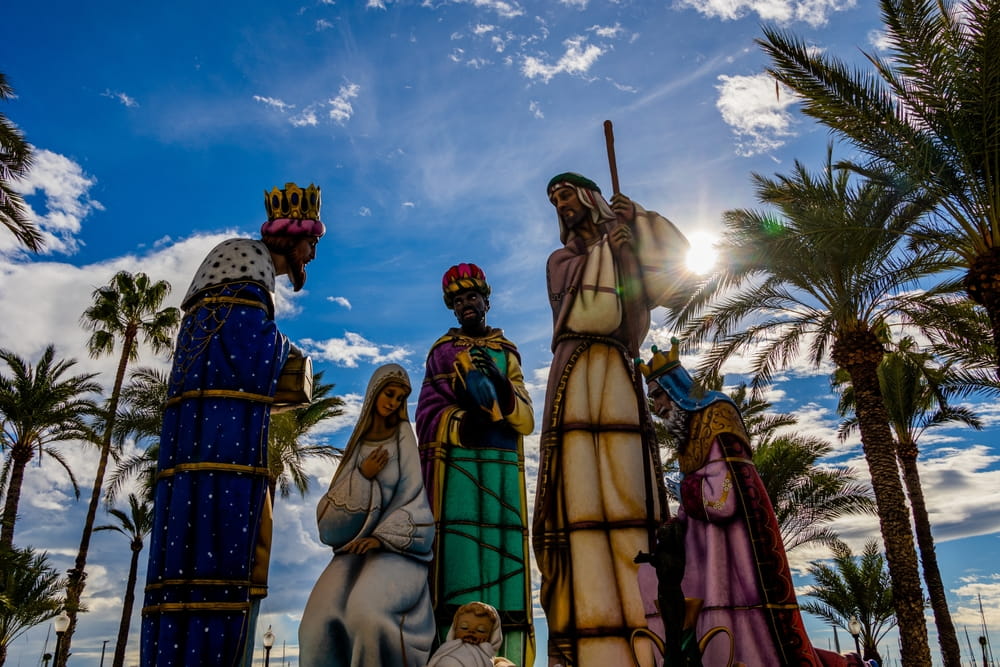
- The Giant Nativity Scene, Plaza del Ayuntamiento. The city’s headliner is a nativity with six enormous figures, a Guinness record holder since 2020. Saint Joseph alone stands 17 metres tall, the Virgin Mary 10, and even the baby Jesus tops three metres. Viewing is free. Last season it ran from 23 November to 7 January, with the square closed to traffic. Dates for 2026 to 2027 haven’t been published yet, so check the council’s Christmas programme before you build a trip around it.
- Candlelight at the MARQ, from December. The archaeology museum fills with thousands of candles while a string quartet plays pop and film hits. Fever lists Hans Zimmer on 5 December, Christmas Classics between 19 and 26 December and a Christmas Soundtracks session on 26 December, while Queen vs. ABBA keeps running into March. Tickets start around €22. These are tribute concerts, so book for the atmosphere, not the originals.
- Els Enfarinats, Ibi, 28 December. On the Day of the Innocents, a gang of «insurgents» in the inland town of Ibi stage a mock coup d’état, seize the town hall and settle matters with flour, eggs and firecrackers. The tradition is more than 200 years old and sits inside Ibi’s winter festival, which runs from 13 December to 6 January. Wear something you won’t miss.
- Three Kings in Alcoy, 5 January. Up in the hills, Alcoy holds Spain’s oldest Three Kings parade, run continuously since 1885 with documented roots going back to 1866. Over a thousand locals take part, the Kings arrive on camels, and the royal pages climb long wooden ladders to balconies to deliver presents. It starts around 18:00 and goes on for hours. Dress warmly, because Alcoy is colder than the coast.
- Carnival, early February. Alicante hasn’t published its 2027 programme yet, but Ash Wednesday falls on 10 February, so the party lands in the first days of the month rather than mid-February. The big night is the Sábado Ramblero on the Rambla de Méndez Núñez, most likely Saturday 6 February: costumes, two stages and music until 4 a.m., with more than 40,000 people in 2025. The Burial of the Sardine traditionally closes the festivities around Ash Wednesday. Confirm dates on alicanteturismo.com, and keep a plan B, since that wind alert in 2026 pushed the Ramblero to a Friday.
The City Without the Crowds
Summer Alicante is lovely, loud and booked solid. Winter Alicante is the same city with its shoulders dropped. Climb to Santa Bárbara Castle, where entry is free and the air is so clear you can spot Tabarca island on the horizon. Come down through Santa Cruz, all whitewashed lanes and potted geraniums, and get lost on purpose. Visit the Mercado Central before noon for Santa Pola prawns, oranges and salted almonds. On a wet afternoon, the MARQ museum is far better than its reputation suggests.
Beyond the City Limits
Almond blossom turns the inland valleys white and pink from late January into February, and the Jalón Valley and Guadalest are the classic drives. Hiking finally makes sense: the Peñón de Ifach, Sierra Helada and Aitana are pleasant in winter and punishing in July. Pack water anyway, because the sun still has opinions. Professional teams come for cycling camps, golf courses are green and cheaper out of season, and flamingos winter in the lagoons near Santa Pola and Elche. The Elche palm grove, a UNESCO site with around 200,000 palms, is cool, shady and quiet. Tabarca island loses its day-trippers and goes back to being a fishing village with very good fish stew (ferries run less often, so check the timetable).
What to Eat When It’s Cold-ish
The Practical Case for Visiting in Winter
Flights into Alicante-Elche remain plentiful, and winter fares and rentals are often far lower than in July. More importantly, you see the place honestly: the school run, the Saturday market, the neighbours who say hello. If a town still feels good on a quiet Wednesday in February, it will feel good for years. Remote workers do well here too, thanks to decent fibre and a coast within walking distance of many flats. Non-EU visitors should watch the Schengen limit of 90 days in any 180, and anyone staying longer should check current residency rules before trusting a blog post, including this one.
Frequently Asked Questions
Is Alicante warm in winter?
By northern European standards, Alicante has a mild, sunny winter. Average daytime highs are around 16–19°C, but evenings and nights are much colder, so bring layers.
What can I do in Alicante in winter?
Explore the old town and Santa Bárbara Castle, visit museums and the Central Market, attend seasonal events, or take day trips for hiking, cycling, golf and almond blossom.
What are some of the main winter events near Alicante?
Highlights include the giant nativity scene in Alicante, Els Enfarinats in Ibi on 28 December, Alcoy’s Three Kings parade on 5 January and Alicante Carnival in early February. Check official programmes for confirmed dates.
Can you swim in Alicante in winter?
The sea is around 14–15°C in winter, so swimming is possible but cold. It is best suited to people who are comfortable with low water temperatures.
What should I check before renting or buying a home in Alicante for winter?
Check the heating, insulation, windows and ventilation, and ask about damp, especially in north-facing properties. If you plan to stay longer than a short visit, check current residency requirements as well.