
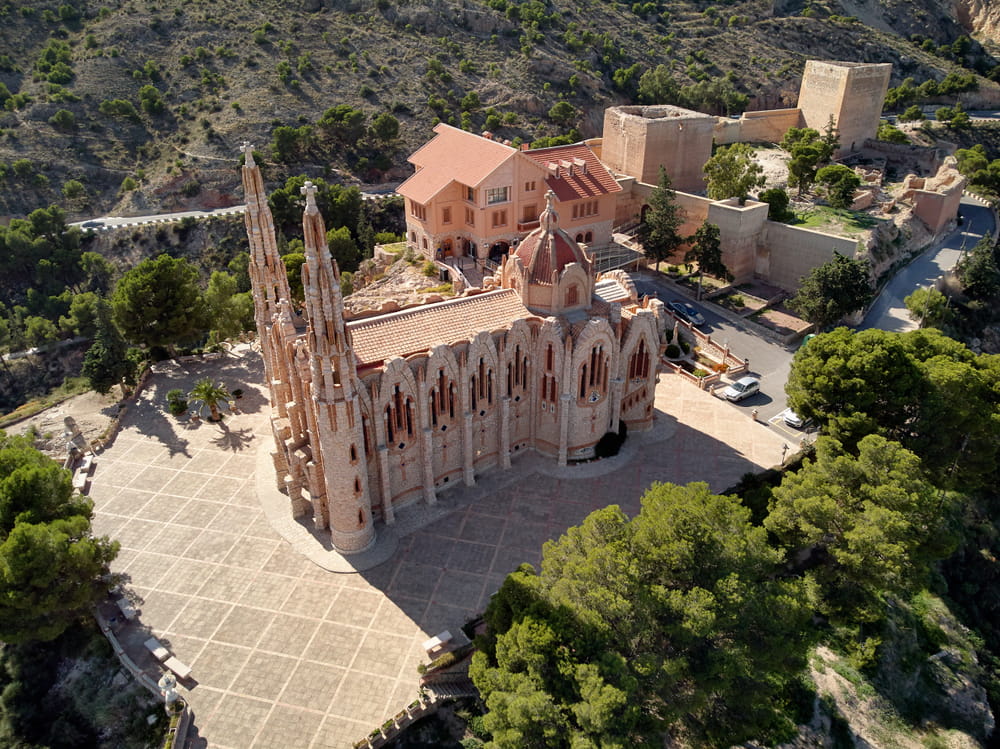
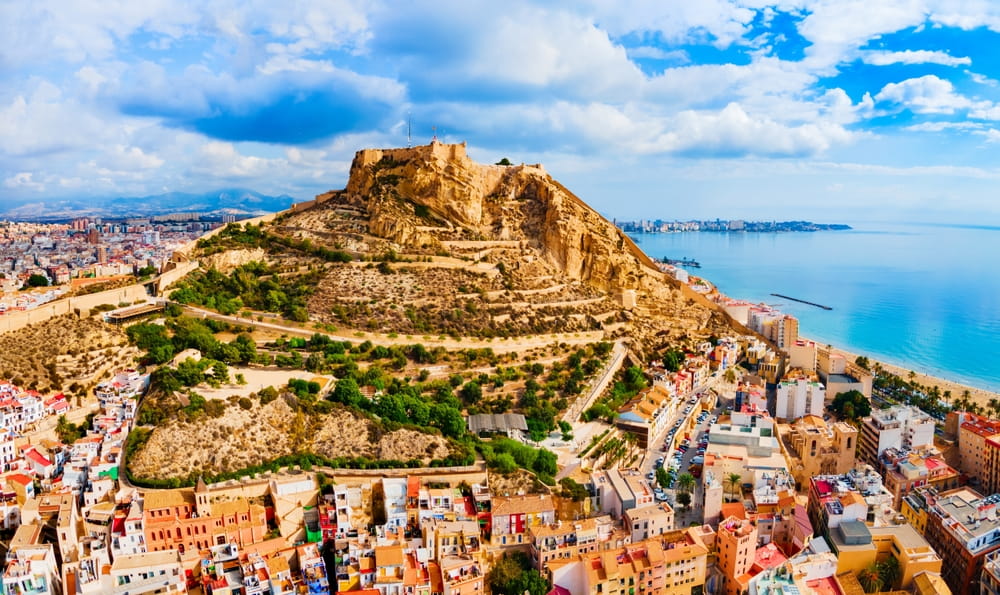
Alicante Province is best discovered castle by castle – from the sea views of Santa Barbara Castle and the coastal fortresses of Santa Pola and Moraira, to the dramatic heights of Guadalest, the historic strongholds of the Vinalopo Valley, and the quieter inland castles hidden among mountains and forests. Most routes work best by car, and Alicante city is one of the most practical bases for exploring them at a relaxed pace.
Planning a castle route across Alicante Province?
Make Alicante city your base and explore the coast, Guadalest, the Vinalopó Valley and inland castles at your own pace. Alicante Smart Hotel is a practical option for travellers who want comfort, independence and easy access to the city centre before and after each day trip.
Table of contents
- Route 1: Alicante City & the Coast – Sea, Light, and Watchtowers
- Route 2: Guadalest & Marina Baixa – Dramatic Landscapes and Hidden Worlds
- Route 3: The Vinalopo Valley – The Castle Corridor
- Route 4: Mountains and Silence – Wild Castles of Alicante
- Where to stay?
- FAQ
There is a special way to discover the province of Alicante – not through its beaches, but by following the line of castles that rise across its mountains, valleys, and coastline. This journey is not rushed. It unfolds slowly, like a well-aged wine, revealing layers of history, culture, and atmosphere at every stop.
You may also like our Alicante Travel Guide: Everything You Need to Know About the City and Region
Today, we invite you to discover some of the most iconic castles in the province of Alicante, while also suggesting carefully curated routes that combine history, scenic landscapes, and memorable stops along the way.
Route 1: Alicante City & the Coast – Sea, Light, and Watchtowers
Begin in the vibrant heart of the province, in the city of Alicante, where the Castillo de Santa Barbara dominates the skyline. The best way to approach it is not by elevator, but on foot – taking the winding path up Mount Benacantil in the early morning or just before sunset. As you climb, the city gradually reveals itself: palm-lined avenues, the marina, the deep blue Mediterranean stretching endlessly beyond. At the top, time slows down. The scale of the fortress, shaped over centuries, invites you to wander without direction.
Here you have our Alicante Gastronomic Guide: Food & Drink Recommendations
Castillo de Santa Barbara on the map
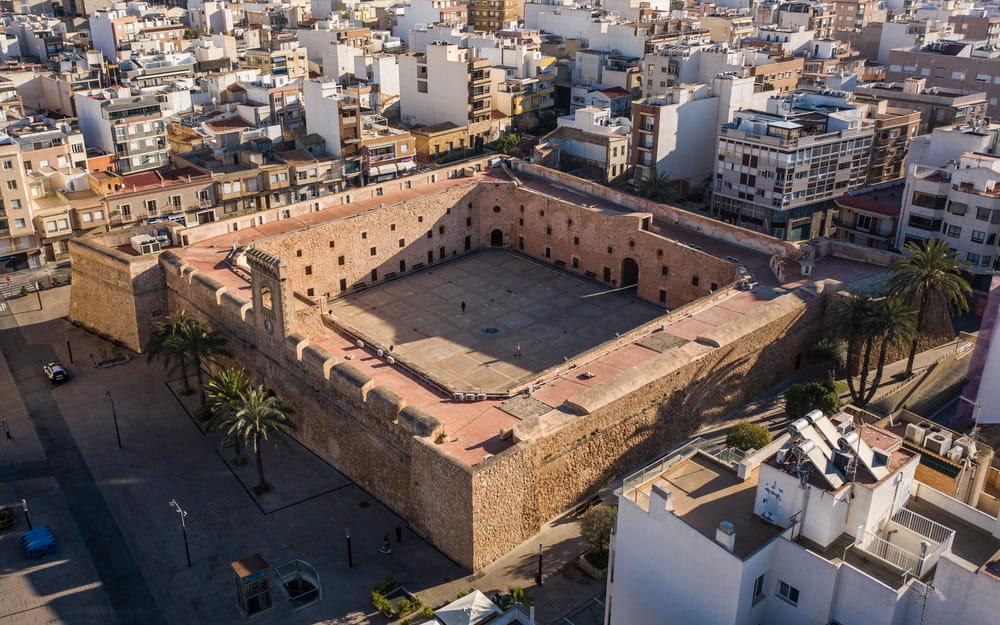
After descending, continue south to Castillo Fortaleza de Santa Pola, a strikingly symmetrical Renaissance fortress built to defend against pirate attacks. Unlike Santa Barbara, this castle feels grounded and enclosed, its thick walls hiding a calm inner courtyard. It’s worth lingering here, imagining the tension of coastal life in the 16th century.
Castillo Fortaleza de Santa Pola on the map
See our article The Best Museums in Alicante Worth Visiting
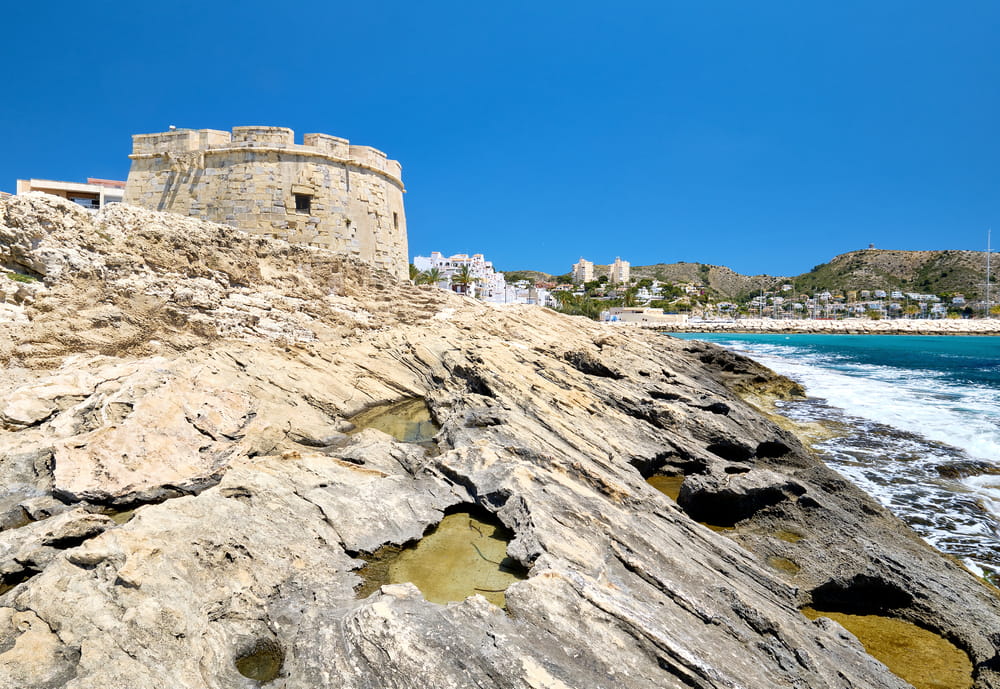
From there, follow the coastline north toward Castillo de Moraira, a smaller but beautifully positioned fortress right by the sea. This is less about history and more about atmosphere – the sound of waves, the salty breeze, the golden light reflecting off stone.
Castillo de Moraira on the map
To complete the day, head inland slightly to Bodegas Enrique Mendoza, one of the most respected wineries in the region. Surrounded by vineyards and Mediterranean pine, it offers structured tastings where you can discover Monastrell and elegant blends that reflect the Alicante terroir. After a day of castles and sea air, a glass of red here feels especially deserved.
- Tip: This route works best by car. Plan for a full day, with a long lunch by the coast and a late-afternoon winery visit.
- Bodegas Enrique Mendoza on the map
Not sure how to plan your Alicante weekend route? See our guide: The best 2–3 day itinerary to discover Alicante
Route 2: Guadalest & Marina Baixa – Dramatic Landscapes and Hidden Worlds
The road to El Castell de Guadalest is one of the most scenic in the province, winding through mountains that feel almost cinematic. Arrive early, before the crowds, when the village still feels like a secret. Entering through the tunnel carved into the rock is a moment you won’t forget – it feels like stepping into another dimension.
El Castell de Guadalest on the map
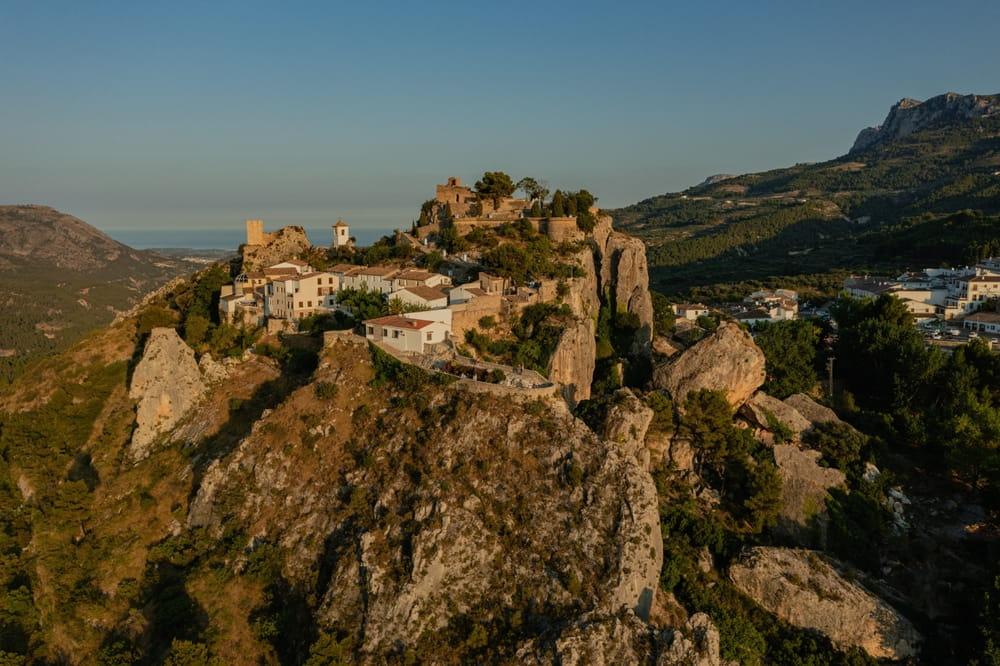
Inside, everything is small, quiet, and suspended in time. The castle ruins themselves are modest, but the views are overwhelming: the turquoise reservoir below, the rugged peaks beyond. It’s a place to pause, not rush.
On your way back, consider stopping in the Jalon Valley (Vall de Pop), a region known for its wines and relaxed rural charm. At Bodegas Xalo, you can taste local Moscatel wines – fragrant, slightly sweet, and deeply connected to the landscape. The atmosphere is unpretentious, making it a perfect contrast to more formal wineries.
- Tip: Combine this route with a countryside lunch – look for traditional restaurants serving arroz dishes or grilled meats.
- Bodegas Xalo on the map
You may also be interested in Alicante’s Top Sights: What to See and Why This City Is Truly Special
✨Club Alegria
Sign up for our club and enjoy its benefits:
✔10% exclusive discount
✔Welcome amenity: complimentary water and coffee capsules
✔Check-out at 1:00 PM or Early check-in at 2:00 PM (optional)
Route 3: The Vinalopo Valley – The Castle Corridor
This is perhaps the most fascinating route of all – a chain of fortresses stretching across the Vinalopo Valley, once a contested frontier between Muslim and Christian territories. Driving here feels like moving through a living timeline.
Start in Castalla, where the castle rises above a quiet town. The climb is gentle, and the views open gradually, revealing the agricultural landscape that once made this area so strategic. Nearby, Onil offers a completely different experience: the Palau Fortalesa del Marques de Dosaigues blends military strength with noble elegance. Its symmetry and refined details hint at a time when power was expressed as much through architecture as through force.
Castillo de Castalla on the map
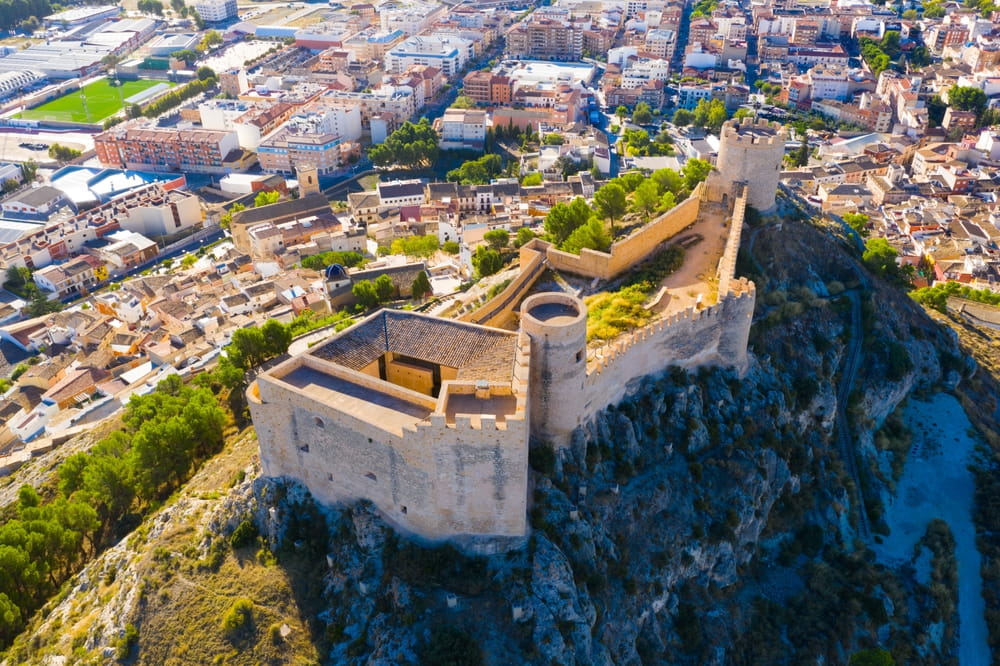
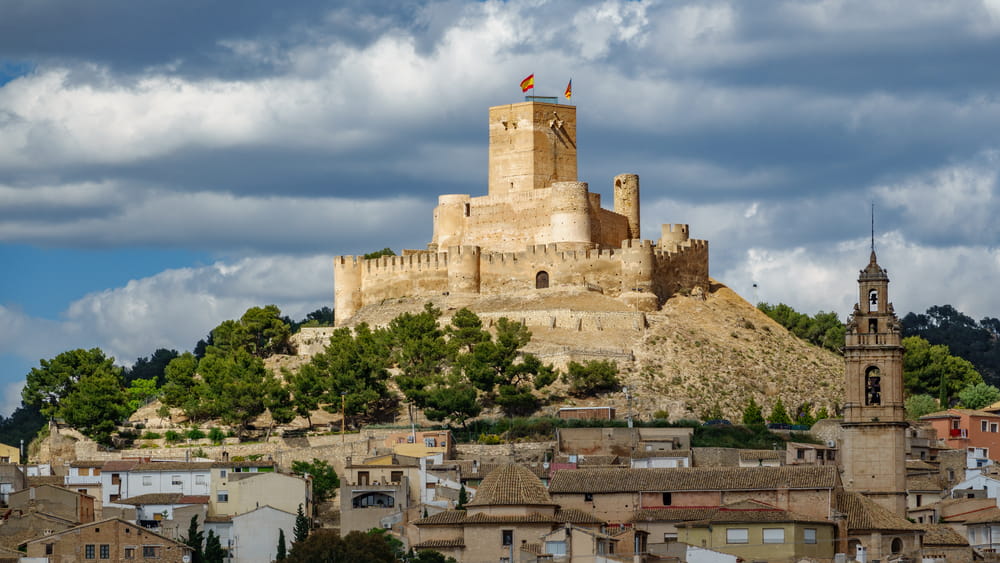
Continue to Biar, where the tall Castell de Biar stands as a reminder of Islamic engineering. The village itself is charming and worth a slow walk, with narrow streets and a strong sense of identity.
Castell de Biar on the map
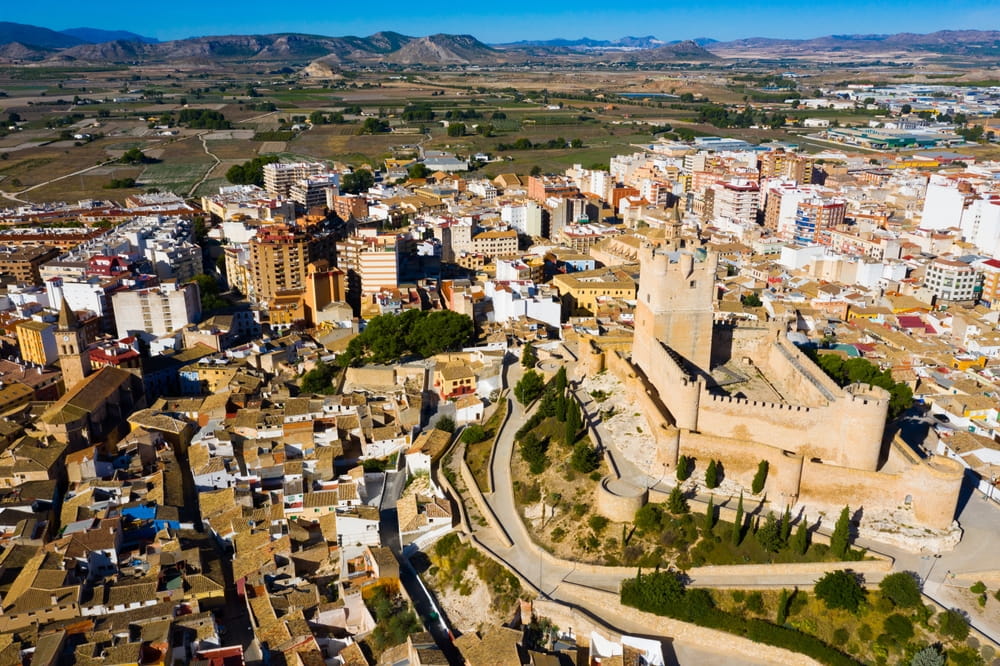
Then comes Villena, home to the impressive Castillo de la Atalaya. This is one of the most powerful and visually striking castles in the region, rising directly from the rock. Nearby, you’ll find Bodegas Francisco Gomez, a winery that combines tradition with modern techniques. Tastings here often include not just wine, but also local olive oil – adding another layer to the experience.
Castillo de la Atalaya on the map
As you move further along the valley, the castles of Saix, Petrer, and Elda appear one after another, each with its own character. The Castell de Saix is perhaps the most photogenic, perched dramatically above the town, while the Castell de Petrer feels more intimate and accessible. The Castillo de Elda, though more ruined, carries a quiet dignity.
Castillo de Sax on the map
Castillo de Petrer on the map
Castillo de Elda on the map
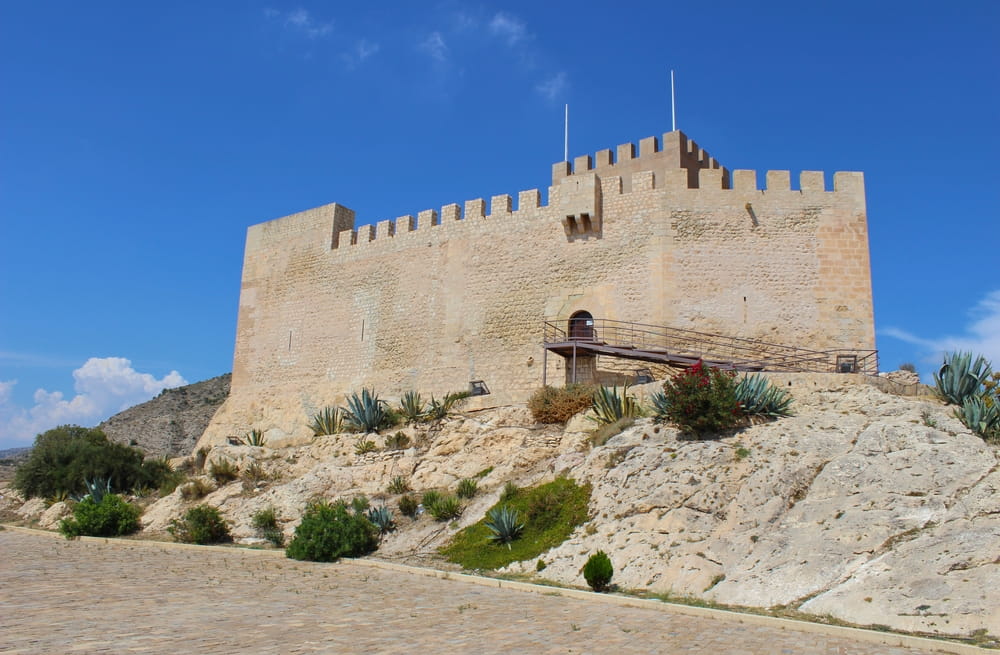
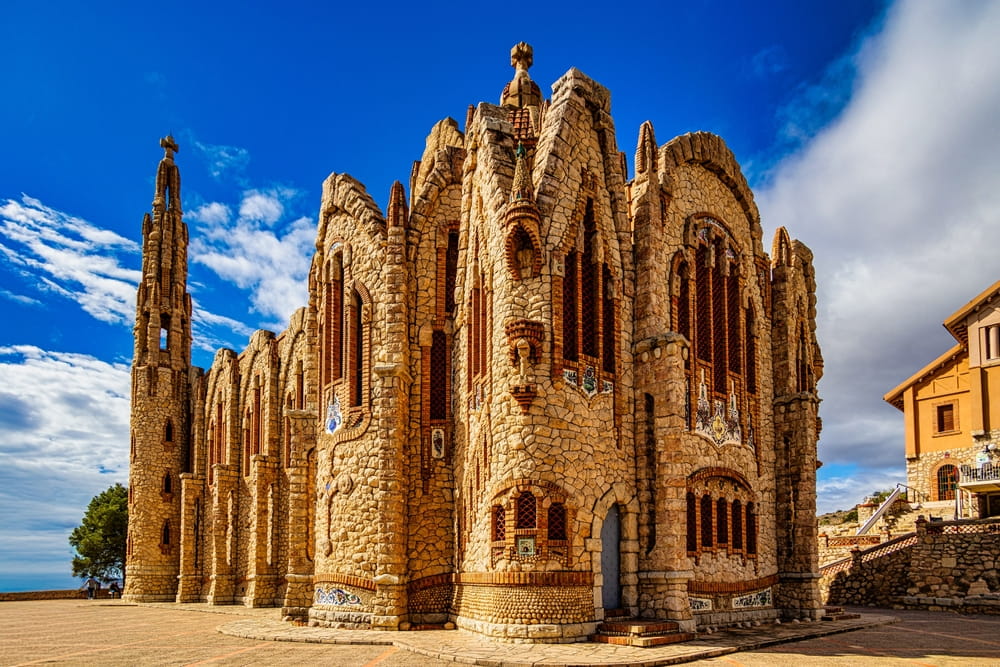
End the route in Novelda, where the Castillo de la Mola stands beside the unique Santuario de la Magdalena. The contrast between medieval stone and modernist architecture is striking, almost surreal. Nearby, Bodega Casa Sicilia offers a beautiful setting for a final stop – its gardens and terraces perfect for a relaxed tasting.
Castillo de la Mola on the map
- Tip: This route deserves at least two days if you want to explore it properly without rushing.
- Bodegas Francisco Gomez on the map
- Bodega Casa Sicilia on the map
See our article The Best Museums in Alicante Worth Visiting
Route 4: Mountains and Silence – Wild Castles of Alicante
For those who prefer solitude and nature, the inland mountains offer a different kind of experience.
The Castell de Banyeres de Mariola, surrounded by forest, feels peaceful and contemplative. It’s a place where you can hear the wind and birds, rather than other visitors. From here, the Sierra de Mariola invites exploration – on foot or by bike.
Further south, the castle Fort de Bernia is more of an adventure than a visit. Reaching it requires effort, but the reward is a sense of isolation and raw beauty. The ruins blend into the landscape, as if nature is slowly reclaiming them.
Castell de Banyeres de Mariola on the map
Fort de Bernia on the map
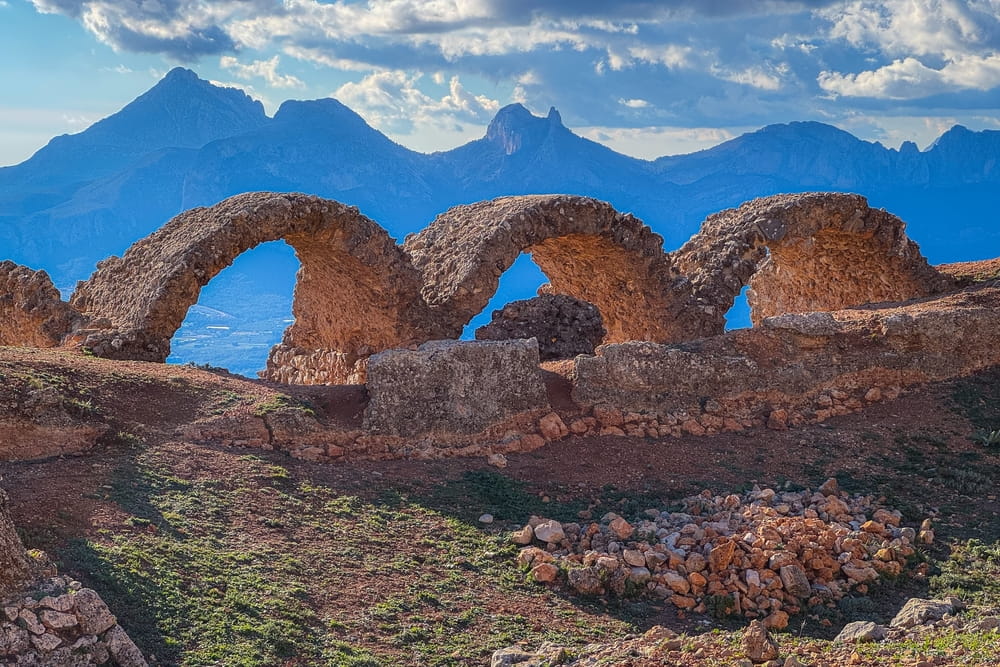
Finally, the Castillo de Cox, overlooking the Vega Baja, offers a quieter but still rewarding stop. It’s less visited, which makes the experience feel more personal.
To complement this route, consider visiting smaller, family-run wineries or local cooperatives. In this part of Alicante, wine tourism is less polished but often more authentic – you may find yourself tasting directly with producers, hearing stories that never make it into brochures.
- Tip: Bring good shoes, water, and time. These places are about the journey as much as the destination.
- Bodega Medina on the map
Castillo de Cox on the map
Yes, at Alicante Smart Hotel, we believe that exploring the castles of Alicante is never about ticking boxes. It is about moving through landscapes and time, about sensing how geography has shaped history – and how that history still lingers in every stone wall and quiet tower.
But to truly experience this journey, we invite you to go further. Pair these moments with a glass of exceptional local wine – rich Monastrell, elegant blends from the Vinalopo Valley, or fragrant Moscatel from the sunlit hills – and end your day with a traditional Alicante dinner. Imagine a table set with arroz dishes, slow-cooked meats, fresh Mediterranean vegetables, and local olive oil, all enjoyed in the warm evening light after a day of discovery.
Take your time.
Drive slowly.
Stop often.
And let Alicante reveal itself to you – not simply as a destination, but as a story you can taste, feel, and truly live.
Where to stay?
If you want to explore the castles of Alicante Province without constantly changing hotels, Alicante city is one of the most convenient places to stay. It works especially well as a base for this kind of trip: from here, you can easily head out toward Santa Barbara Castle, the coastal fortresses of Santa Pola and Moraira, the mountain landscapes of Guadalest, or the long historic chain of castles across the Vinalopo Valley. After a day on the road, you can return to the sea, the evening light of the promenade, and the relaxed energy of the city.
This is also a practical choice because these routes are very different in rhythm. Some are perfect for a full day by car, others deserve a slower pace with stops at wineries, viewpoints, and traditional restaurants along the way. Staying in Alicante gives you flexibility: you can spend one day by the coast, another in the mountains, and another following inland fortresses without having to pack and unpack each night.
For this kind of journey, Alicante Smart Hotel offers a particularly comfortable base. Its location makes it easy to reach the center, the Old Town, Santa Cruz, and Plaza del Ayuntamiento, while the accommodation format is designed for travelers who want both comfort and independence. The rooms include a kitchen, private bathroom, Wi-Fi, air conditioning, refrigerator, microwave, and Nespresso coffee machine – ideal if you want an early breakfast before setting off to the castles or a quiet evening back in the city after a long day of exploring.
It is a good option whether you are planning a short cultural escape or a longer stay to discover the province more slowly. There is also a pool and additional services for extra comfort, while direct booking includes a 10% discount. For stays of 7 nights or more, a 15% discount is available on request.
And, perhaps, the most welcome detail after a long night: breakfast delivered directly to your room. No need to rush, no need to step outside – just a quiet moment to recover, recharge, and relive the best moments of the night before stepping back into the Alicante sun.
See all accommodation options:
FAQ
Does Alicante have a castle?
Yes. Alicante is home to Santa Barbara Castle, one of the city’s most iconic landmarks. It stands on Mount Benacantil above the city and offers panoramic views over Alicante, the marina, and the Mediterranean coast.
How long does it take to walk up Santa Barbara Castle, Alicante?
If you choose the urban walking route up the hill, allow around 30 minutes on foot. The exact time depends on your pace, the weather, and where you start, but it is generally a moderate uphill walk rather than a long hike.
Is the castle free in Alicante?
Yes, entry to Santa Barbara Castle is free. If you prefer not to walk, the lift is a separate paid service.
How do I get into Alicante castle?
You can reach Santa Barbara Castle on foot via the urban walking routes, by lift from Avenida Juan Bautista Lafora opposite Postiguet Beach, or by shuttle/minibus. Walking is the most atmospheric option, while the lift is the easiest and quickest way up.
What to visit in Alicante province?
If you are exploring Alicante Province, some of the most rewarding stops include Santa Barbara Castle in Alicante city, Castillo Fortaleza de Santa Pola, Castillo de Moraira, El Castell de Guadalest, the fortified towns of the Vinalopo Valley such as Castalla, Biar, Villena, Petrer and Novelda, and quieter inland sites like Banyeres de Mariola, Fort de Bernia and Castillo de Cox. Pairing castles with local wineries and traditional restaurants makes the experience even richer.