
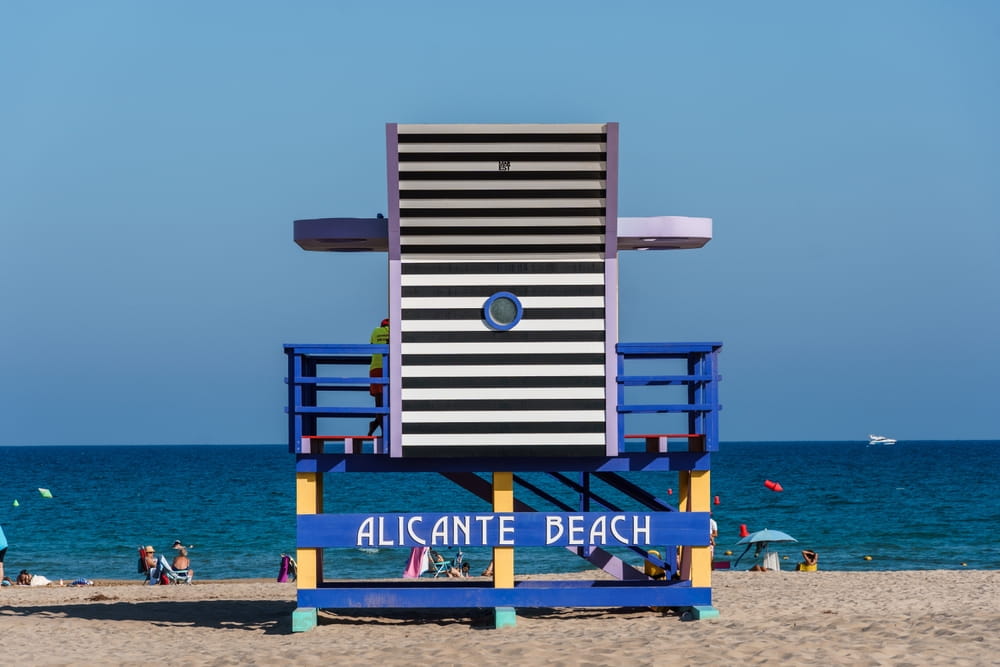
More than one and a half million people use public transport to reach Alicante’s beaches in July and August.
Taking these figures into account, Alicante City Council and the transport company Vectalia have launched the summer BeachBus campaign to promote the use of public transport for trips to the city’s beaches.
10 bus routes lead to Alicante’s beaches
In particular, seven urban and three intercity routes connect neighbourhoods and municipalities around the capital with the Alicante coastline, offering a convenient and affordable way to enjoy the sun and the sea.
These are Vectalia urban buses No. 2, 5, 9, 12, 22, 27 and 28, which transported 1,303,223 passengers last year.
In addition, La Alcoyana intercity buses No. 21, 31 and 38 carried another 262,901 passengers.
For visitors to the city, this format is especially convenient: from the centre of Alicante, they can quickly reach the sea, combining a beach day with a walk around the city and visits to the main attractions. More information about the beaches can be found in the article “Best beaches in Alicante: Postiguet or San Juan – which one to choose?”.
How to get to Postiguet and San Juan
The BeachBus network makes it possible to reach Alicante’s main beaches and coves from different parts of the city and nearby municipalities.
Buses No. 2, 5, 12, 21 and 22 go to Postiguet beach, stopping very close to Puerta del Mar.
San Juan beach – the city’s longest sandy beach, stretching for more than 6 km – can be reached on lines 21, 22, 31 and 38, which connect it with the centre of Alicante, Mutxamel, San Juan and San Vicente del Raspeig.
Line 21 also allows passengers to extend the route to El Campello.
Buses also go to coves and quieter beaches
As for Cabo de la Huerta, it can be reached by buses No. 22 and 28, which are ideal for those looking for a more peaceful atmosphere in the coves.
Buses No. 9, 21, 22 and 28 go to Albufereta and Almadraba beaches, which offer views of Serra Grossa and Santa Bárbara Castle.
Finally, San Gabriel and Urbanova can be reached by bus No. 27, which serves the southern part of the city and its less crowded beaches.
Those who want to combine beach relaxation with an active route along the coast may also find the article about snorkelling in Alicante useful.
BeachBus routes are easier to recognise by their logo
At the height of the beach season, the frequency of some of these lines is increased, and detailed information is displayed on screens inside the vehicles to make the journey to the sea as simple and comfortable as possible.
Buses heading to the city beaches on the seven urban and three intercity routes are marked with the BeachBus logo on the front electronic displays, so passengers can better understand the nature of the service.
Where to check the timetable
Information about all routes included in the campaign, as well as updated timetables and frequencies, can be found in the Alicantesemueve app for iPhone and Android devices, on the municipal website movilidad.alicante.es and on the operator’s website movilidad.vectalia.es, as well as on real-time information panels installed at smart stops throughout the city.
For tourists, BeachBus is a convenient way to explore the city without a car, especially when staying in the central part of Alicante. Alicante Smart Hotel is located in the Carolinas Bajas neighbourhood, close to the centre, transport links and Postiguet beach, making it convenient for city routes, beach holidays and walks around Alicante.
Photo: JFarq / Shutterstock.com