
TL;DR
- What it is: the Bonfires of Saint John – Las Hogueras de San Juan – are Alicante’s most important summer festival, combining monumental art, fire, music, beach rituals, fireworks and Mediterranean tradition.
- Key dates in 2026: the main festival period runs in mid-to-late June, with the Night of Fire on June 23 and La Cremà on June 24.
- Where to go: Alicante city is the main place to experience monuments, parades, fireworks and La Cremà, while nearby coastal towns offer more relaxed beach celebrations.
- What to expect: crowds, warm evenings, beach gatherings, fireworks, food, music, large sculptural monuments and the final burning ceremony.
Travel tip: choose accommodation close to the city centre, beaches and festival areas to reduce transport time during the busiest days.
Every June, when the Mediterranean sun hangs long over the Costa Blanca and the nights become soft and warm, Alicante enters a completely different dimension. The city stops being just a seaside destination and turns into a living theatre of fire, music, tradition, and collective emotion.
This is the time of the Bonfires of Saint John – Las Hogueras de San Juan – one of the most spectacular summer festivals in Spain and arguably the most important cultural event in the province of Alicante.
For travellers discovering the Costa Blanca, for families relocating to Spain, and for anyone simply chasing unforgettable Mediterranean experiences, this celebration is not just something to observe. It is something to feel.
See our guide to the best itinerary for exploring Alicante in 2–3 days
Ancient Origins: From Pagan Fire to Modern Alicante Identity
Long before tourism and modern cities, people across Europe celebrated the summer solstice with fire. It was believed that flames purified the spirit, protected against misfortune, and symbolically strengthened the sun at its peak.
When Christianity spread through Spain, these ancient rituals merged with the feast of Saint John the Baptist, celebrated on June 24. The fire remained, but its meaning evolved.
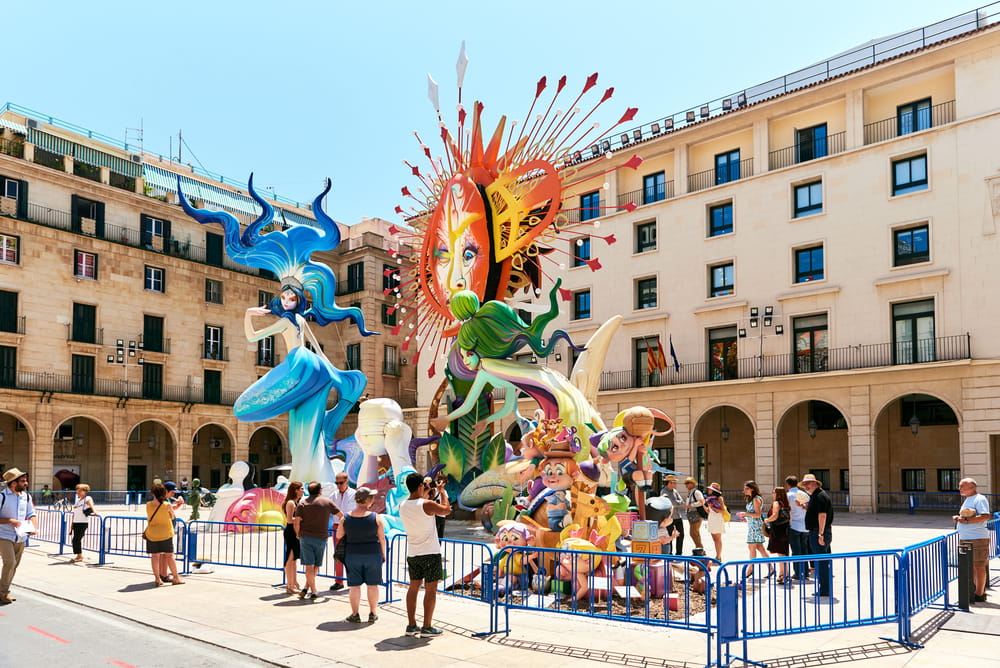
In Alicante, however, the festival took on a unique artistic identity only in the 20th century. Inspired by Valencia’s Fallas tradition, local communities began building large sculptural monuments made of wood, cardboard, and paint. These works of art – often satirical, poetic, or deeply symbolic – were destined to burn.
And so, in 1928, the modern Bonfires of Saint John in Alicante were born.
Today, the festival is not only a cultural treasure of Spain but also one of the most recognized events in the entire Mediterranean region.
You may also like our Alicante Travel Guide: Everything You Need to Know About the City and Region
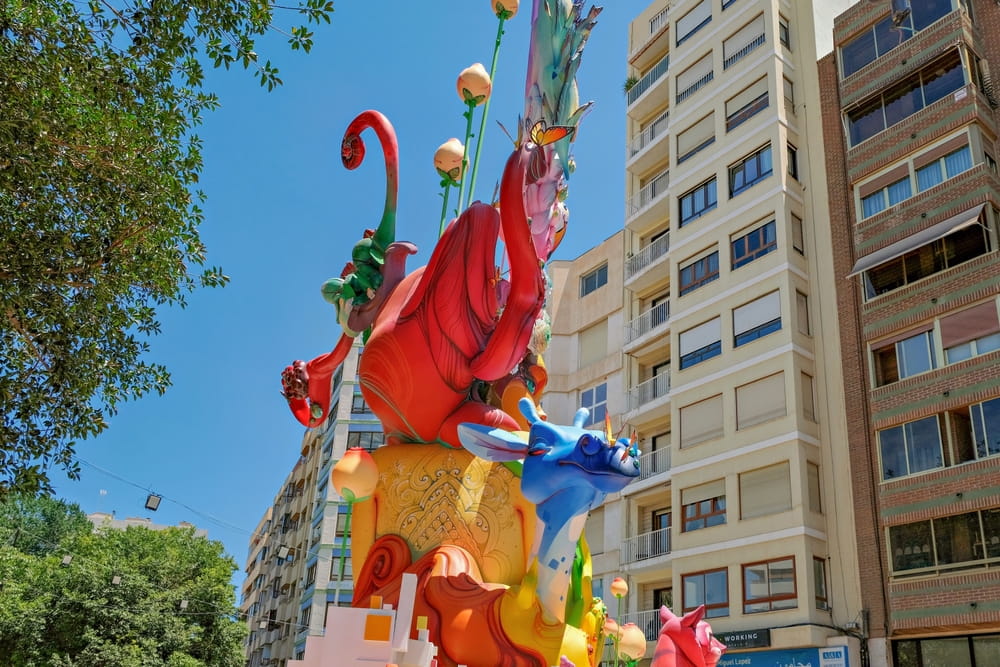
Photo: veja / shutterstock
Which Is monuments made of wood, cardboard, and paint. These works of art – often satirical, poetic, or deeply symbolic – were destined to burn.
And so, in 1928, the modern Bonfires of Saint John in Alicante the Best Town for San Juan in Alicante Province?
Alicante city remains the absolute heart of the festival – the only place where monuments, official events, fireworks, and the final night La Cremà all combine into one unified cultural experience.
However, towns like El Campello, Santa Pola, Guardamar del Segura, and Torrevieja offer more relaxed beach celebrations, often preferred by families and those seeking a quieter atmosphere.
The province as a whole becomes one long coastline of firelight and summer energy.
The Castles in the Province of Alicante: A Travel Guide Through History, Landscapes, and Wine
What Makes the Bonfires of Saint John in Alicante So Special?
Unlike many European midsummer traditions, Alicante does not simply light small fires on the beach. It builds an entire citywide exhibition of monumental art.
Every district creates its own «hoguera» – a giant sculpture that can reach the height of a building. These monuments often reflect politics, humor, social commentary, or pure artistic imagination.
For several days, the city becomes an open-air museum, and then, everything disappears in fire.
That very last night – La Cremà – transforms beauty into ash in a matter of minutes. It is emotional, dramatic, and strangely cathartic. Locals often say it represents life itself: creation, celebration, destruction, and porenewal.
Traditions, Beaches, and the Magic of June 23
If there is one night that defines Alicante, it is June 23 – Saint John’s Eve.
Across Spain, tourists often ask: What happens on the 24th of June? In many regions, it is a public holiday with modest celebrations. But in Alicante, the night before is where the real magic unfolds.
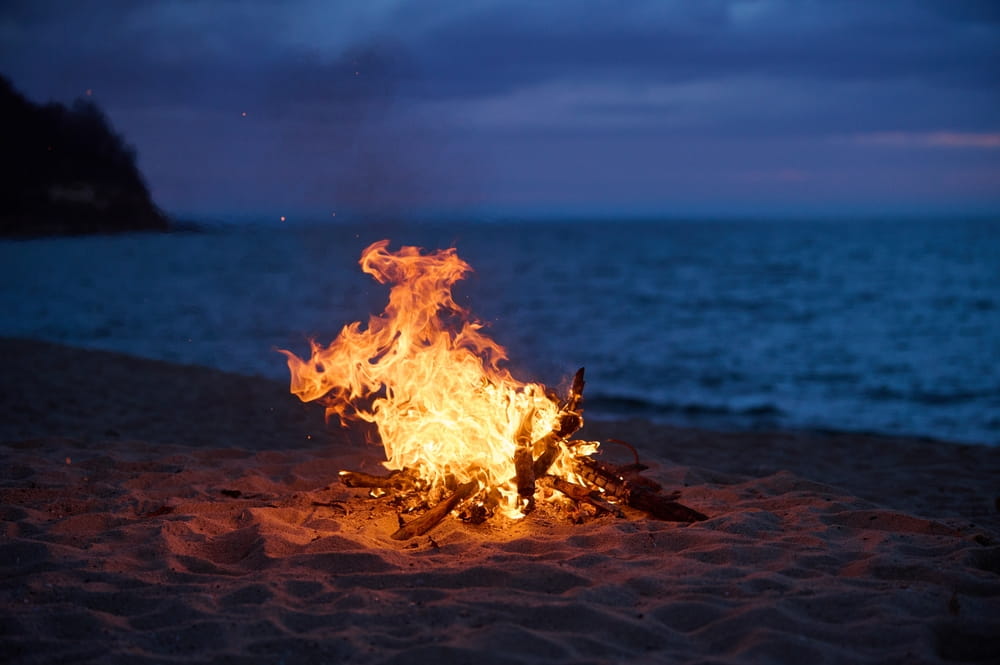
On beaches like Postiguet and San Juan (one of the most beautiful coastal areas in the province), thousands gather around small bonfires. People share food, write wishes on paper, jump over flames, and at midnight run into the sea. These rituals are believed to cleanse bad energy and invite luck for the coming year.
Unlike the UK’s Bonfire Night in November, Spain’s version is not about historical events – it is about wild nature, cleansing fire, powerful renewal, and summer itself.
Interesting Facts About Hogueras de Alicante
- Alicante’s population can more than double during festival week due to national and international visitors.
- Some of the largest bonfire monuments take nearly a year to design and build.
- Fireworks displays over Postiguet Beach are synchronized with music and attract tens of thousands of spectators nightly.
- The festival is represented by the Bellezas del Foc (Belleses del Foc in Valencian), the official queens of the Bonfires of Saint John, who play a central role in ceremonies, parades, and cultural events throughout the celebration.
- After the burning of the monuments, firefighters spray crowds with water in a joyful tradition called La Banyà.
- The festival has been declared of International Tourist Interest in Spain.
✨Club Alegria
Sign up for our club and enjoy its benefits:
✔10% exclusive discount
✔Welcome amenity: complimentary water and coffee capsules
✔Check-out at 1:00 PM or Early check-in at 2:00 PM (optional)
Food of San Juan: Mediterranean Summer on a Plate
Food during Hogueras is not just nourishment – it is part of the celebration.
Traditional coca de San Juan, a flat pastry with vegetables, tuna, or sweet toppings, appears in almost every home and street celebration.
Seafood plays a central role, especially in coastal Alicante where the Mediterranean defines daily life. Grilled prawns, octopus, rice dishes, and paellas are shared in large groups that often stretch long into the night.
And, of course, everything is accompanied by cold drinks, perfect local wines, and the eternal relaxed rhythm of these unforgettable summer evenings.
Are Bonfires Even Legal in Spain?
A common question among visitors is whether bonfires are allowed.
The answer is simple: during San Juan celebrations, fires are strictly regulated but fully legal in designated areas. Municipalities prepare controlled zones on beaches and in public spaces.
Outside of official events, lighting fires on beaches is usually prohibited, especially during dry summer months when fire risk is high.
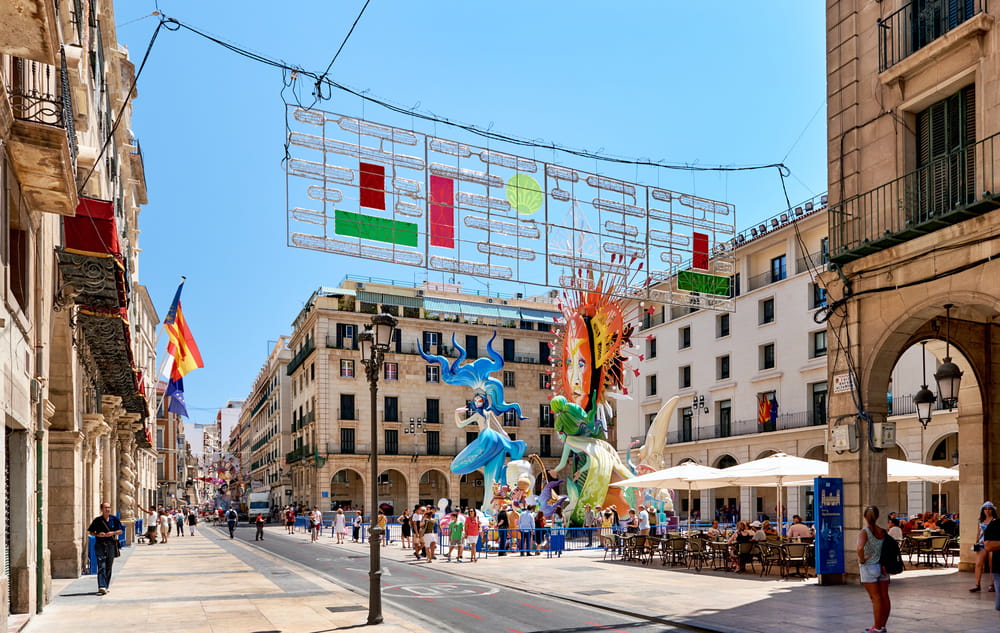
Photo: alex tihonovs / shutterstock
Alicante 2026: Full San Juan Calendar
Mid-June 2026
Monument installations begin across the city. Streets gradually transform into galleries of large-scale art.
June 18–22, 2026
Daily cultural events, parades, live music, and traditional performances.
June 20–24, 2026
Fireworks competition at Postiguet Beach – one of the most photographed events in Alicante’s summer calendar.
June 23, 2026 – Night of Fire
Beaches, music, bonfires, rituals, and collective celebration across the entire Costa Blanca coastline.
June 24, 2026 – La Cremà
The burning of the monuments. The symbolic climax of the festival followed by La Banyà and emotional closure.
Other Music and Summer Festivals in Alicante 2026
The Bonfires of Saint John mark the beginning of an extraordinary summer season in Alicante and across the Costa Blanca. Once the final flames of La Cremà have faded, the region quickly shifts into festival mode, welcoming music lovers from all over Spain and Europe.
Summer 2026 promises an especially exciting calendar. One of the biggest highlights is Low Festival, taking place from July 31 to August 2. Considered one of Spain’s leading indie, pop, and electronic music events, it combines international artists, more than forty live performances, open-air stages, VIP areas, and the unmistakable energy of a Mediterranean summer weekend.
Fans of Latin rhythms will find plenty to celebrate as well. The Reggaeton Millennial Fest returns to Alicante on August 7 and 8, bringing together the biggest urban and reggaeton hits of the 2000s and 2010s in a nostalgic beachside atmosphere. Meanwhile, I Love Reggaeton Alicante, Spain’s largest classic reggaeton festival, once again promises a star-studded lineup and thousands of enthusiastic fans dancing by the sea.
For lovers of urban music, Costa Sonora Festival has established itself as Alicante’s flagship rap and urban music event, showcasing both major names and emerging talent. Its growing popularity reflects the city’s increasingly diverse cultural scene and appeal to younger audiences.
Tabarca Island – All You Need to Know: What to See, How to Get There, Beaches and Gastronomy
Beyond the major festivals, Alicante offers a continuous program of open-air concerts throughout the summer. The waterfront venue El Muelle Live, located in the Port of Alicante, hosts the popular Aquarela Music series, alongside rock concerts, tribute shows, and synth-pop performances under the stars. Área 12, one of the city’s largest outdoor concert spaces, welcomes some of Spain’s most successful touring artists, including celebrated indie bands such as Viva Suecia. The historic Plaza de Toros de Alicante also transforms into a summer concert venue, where legendary Spanish acts, including Hombres G, perform in a uniquely atmospheric setting.
Music lovers visiting in June can also enjoy the Fashion & Music Festival, held on June 13 and 14 at the Concha Municipal Auditorium on Alicante’s famous Explanada. Combining fashion shows, live performances, DJs, and Mediterranean views, it offers a stylish prelude to the Bonfires celebrations.
The musical atmosphere extends far beyond Alicante itself. Along the southern Costa Blanca, beach bars, seaside venues, and open-air stages host countless performances throughout July and August. Visitors staying in Torrevieja, Orihuela Costa, or nearby coastal towns will find themselves perfectly positioned to enjoy a summer filled with live music, sunset concerts, and vibrant nightlife. Together with the Bonfires of Saint John, these events make Alicante one of Spain’s most exciting summer destinations, where culture, music, and the Mediterranean lifestyle come together in unforgettable fashion.
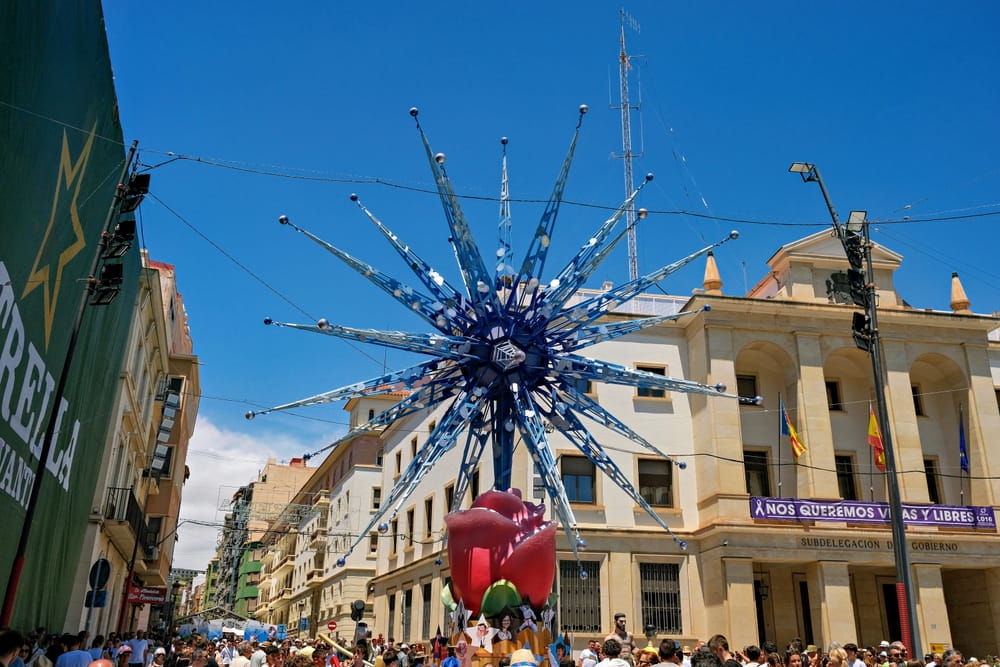
Photo: veja / shutterstock
Where to Stay in Alicante
Choosing the right accommodation can make a significant difference to your San Juan experience. During the Bonfires of Saint John, Alicante becomes one of the busiest destinations on the Costa Blanca. Streets stay lively until late at night, major events take place across different parts of the city, and thousands of visitors arrive to enjoy the celebrations.
For this reason, location is often the most important factor when selecting a hotel. Ideally, you want to be close enough to reach the bonfire monuments, parades, fireworks displays, and beaches without relying heavily on transport, while still having a comfortable place to relax after a long day of sightseeing and festivities. Easy access to restaurants, shops, and the city centre can also make exploring Alicante much more enjoyable.
Comfort is another key consideration. After hours spent walking through the city, attending events, and enjoying the vibrant atmosphere, having a modern, welcoming space to return to becomes especially valuable.
For visitors looking for this balance of convenience and comfort, Alicante Smart Hotel is an excellent option. Its location provides easy access to Alicante’s main attractions, festival areas, and Mediterranean coastline, allowing guests to immerse themselves in the celebrations while enjoying a comfortable base throughout their stay.
The hotel is particularly well suited to travellers who want to experience both the excitement of the Bonfires and the everyday charm of Alicante. Whether you are visiting for a few days, spending a longer holiday on the Costa Blanca, or exploring the city as a potential future home, staying in a well-connected area offers a genuine feel for local life, from walkable streets and neighbourhood cafés to the relaxed Mediterranean lifestyle that attracts so many people to Alicante year after year.
Visiting Alicante for San Juan? Stay close to the city, beaches and festival areas at Alicante Smart Hotel.
What the Bonfires Really Mean
At its core, the Bonfires of Saint John are not just entertainment – they are about the transformation, coming from the depths of centuries.
They mark the beginning of new summer, the power of community, the beauty of impermanence, and the perpetual emotional connection between people, fire, and sea.
For some, it is a festival. For others, it is a tradition. And, for many visitors who return year after year, it becomes a memory that never fades.
At Alicante Smart Hotel, we believe that the Costa Blanca is more than a destination – it is a way of life shaped by light, warmth, and human connection.
We wish you a summer that is not only hot, but truly vibrant. May it be filled with discovery, unforgettable nights by the Mediterranean Sea, and the magic of traditions that bring people together.
And perhaps, during one of these glowing June evenings in Alicante, you will not only experience one of Spain’s most spectacular festivals – the Bonfires of Saint John, but also feel that this place, with its fire, sea, and endless summer sky, could become your home.
FAQ
What festivals are in Alicante 2026?
Alicante 2026 includes the Bonfires of Saint John in June, Low Festival from July 31 to August 2, Reggaeton Millennial Fest on August 7 and 8, I Love Reggaeton Alicante, Costa Sonora Festival, open-air concerts at El Muelle Live and Área 12, summer concerts at Plaza de Toros de Alicante, and the Fashion & Music Festival on June 13 and 14.
What happens in Spain on 23rd June?
June 23 is Saint John’s Eve. In Alicante, beaches, music, bonfires, rituals and collective celebration take place across the Costa Blanca coastline. People gather around small bonfires, share food, write wishes, jump over flames and run into the sea at midnight.
What is the bonfire celebration today in Spain?
The bonfire celebration usually refers to San Juan, or the Bonfires of Saint John. In Alicante, this celebration is known as Las Hogueras de San Juan and combines monumental art, beach rituals, fireworks and the final burning ceremony called La Cremà.
Which country celebrates the bonfires of Saint John?
Spain celebrates the Bonfires of Saint John, and Alicante is one of the most famous places to experience them. The celebration is especially important in Alicante, where Las Hogueras de San Juan are the city’s major cultural event.
What is the biggest festival in Alicante?
The Bonfires of Saint John – Las Hogueras de San Juan – are the biggest and most important festival in Alicante. They bring together monumental sculptures, parades, fireworks, beach gatherings and La Cremà.
Does Spain celebrate Bonfire Night?
Spain does not celebrate Bonfire Night in the same way as the UK. Alicante’s bonfire tradition is connected with Saint John, summer, cleansing fire, renewal and beach rituals, rather than a November historical event.
Where is the fire festival in Spain?
One of Spain’s most spectacular fire festivals is in Alicante, where the Bonfires of Saint John take place every June. Alicante city is the heart of the celebration, while nearby coastal towns also hold more relaxed San Juan events.
What is the festival in Alicante Spain in June?
The main festival in Alicante in June is the Bonfires of Saint John, also known as Las Hogueras de San Juan. In 2026, the key dates include the Night of Fire on June 23 and La Cremà on June 24.