
TL;DR
- Best for: travelers flying to or from Alicante, Costa Blanca, Benidorm, Altea, Villajoyosa and nearby coastal destinations.
- Terminal: Alicante Airport effectively works as one modern passenger terminal for most travelers.
- Security: quiet periods may take 10–20 minutes, while peak summer queues can exceed 45 minutes or even an hour.
- Arrival time: arrive 2 hours before domestic flights, 2–3 hours before European international flights, and closer to 3 hours in peak periods.
- Facilities: shops, duty-free areas, cafés, restaurants, Wi-Fi, charging points, lounges, tourist information and car rental desks.
- Transport: C6 bus, taxis, car rental and city connections are the main options.
Airport Overview
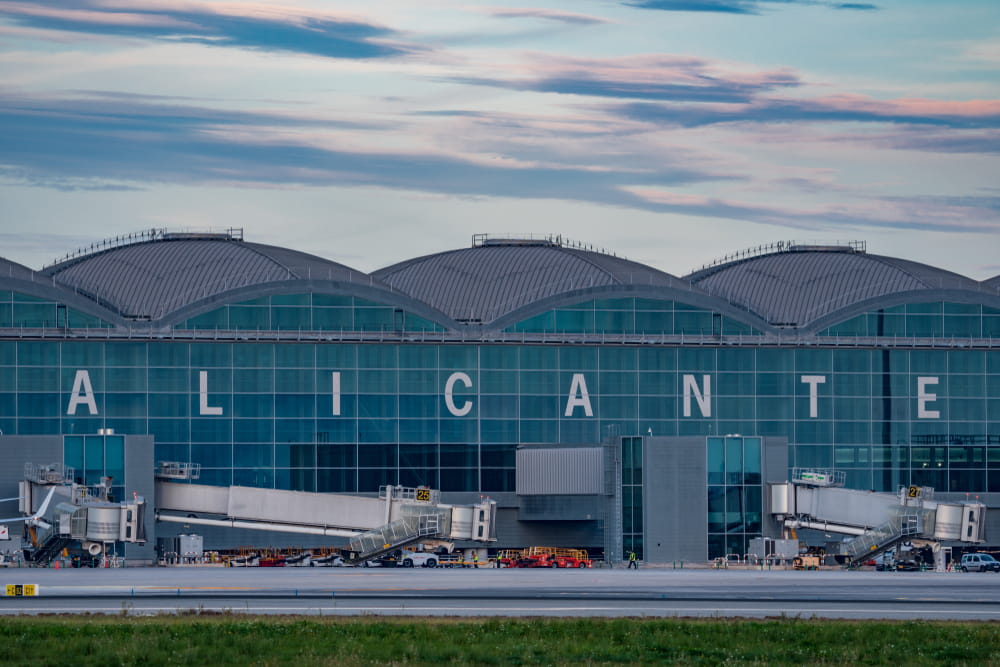
Alicante–Elche Miguel Hernández Airport – commonly known simply as Alicante Airport – is the main international gateway to Spain’s Costa Blanca. Located around 9 kilometers southwest of central Alicante, the airport serves millions of passengers every year and is one of the busiest airports in Spain outside Madrid and Barcelona.
The airport is modern, relatively compact, and surprisingly easy to navigate compared with many large European airports. Despite handling heavy seasonal tourism traffic, especially during summer, it remains user-friendly thanks to its single-terminal layout and straightforward signage in both Spanish and English.
Alicante Airport is especially popular with travelers from the United Kingdom, the Netherlands, Germany, Belgium, Scandinavia, and Ireland. Low-cost airlines dominate operations, although major international carriers also operate regular routes throughout Europe.
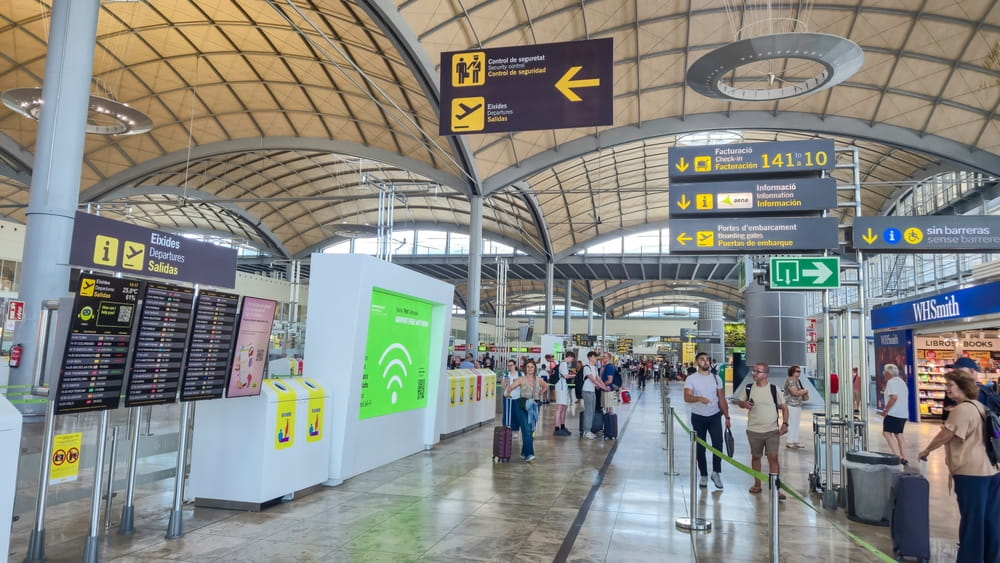
During peak summer months, school holidays, Easter, and Christmas periods, the airport can become extremely busy. Early mornings are usually the most crowded, as many low-cost flights depart before noon. Outside the high season, however, the airport often feels calm and efficient.
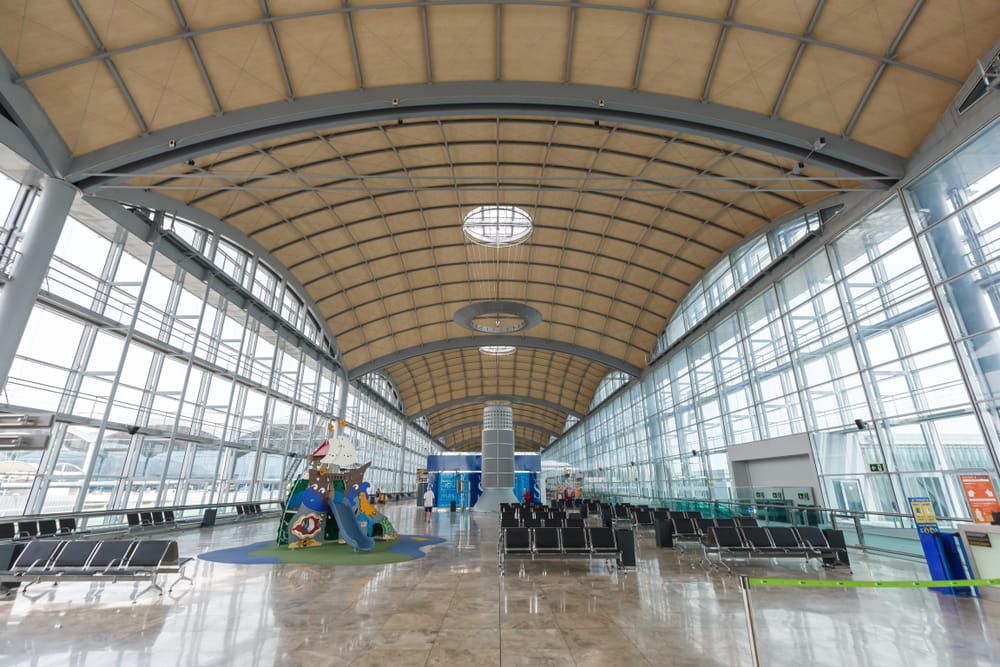
One of the most common questions travelers ask is whether Alicante Airport has two terminals. Technically, the airport once had older terminal buildings, but today almost all passenger operations are concentrated in one large modern terminal known as Terminal N. For passengers, this effectively means there is only one active terminal to worry about – making connections and navigation much easier.
Smart stay tip: If your flight arrives late or leaves early, check room availability at Alicante Smart Hotel and plan your first or last night in the city without extra stress.
Terminals and Facilities
Alicante Airport is designed in a logical, linear format spread across several floors. Departures, arrivals, check-in areas, shops, restaurants, and boarding gates are all clearly marked.
The airport includes:
- Large check-in halls,
- Fast-track and standard security lanes,
- Duty-free shopping zones,
- Restaurants and cafés,
- Family facilities,
- Car rental desks,
- Tourist information services,
- Currency exchange,
- Free Wi-Fi,
- Charging points,
- VIP lounges.
Because everything is housed within one primary terminal structure, walking distances are manageable compared with giant hub airports.
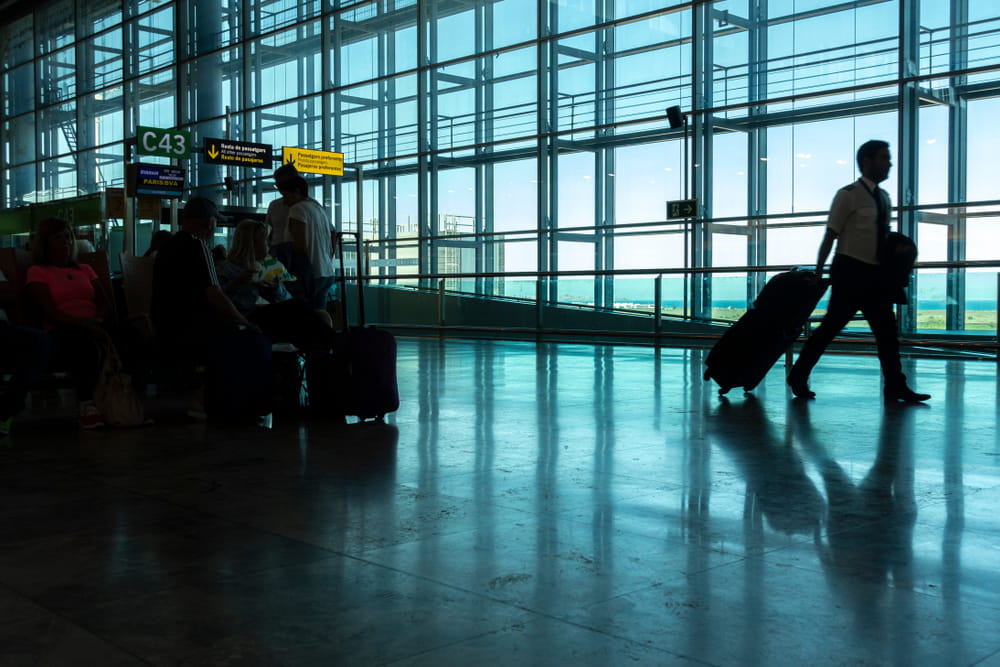
Many travelers wonder whether Alicante Airport is easy to navigate. In practice, yes – it is considered one of Spain’s simpler international airports. Clear bilingual signs, open spaces, and centralized security help reduce confusion.
The airport also includes modern security equipment. Alicante has gradually introduced newer scanners in some lanes, although travelers should still prepare for standard European Union liquid restrictions. That means liquids, aerosols, and gels generally remain limited to containers of 100ml each, carried inside a transparent resealable bag.
Even with newer scanners appearing in parts of Europe, passengers departing from Alicante should still follow the classic 100ml rule unless airport staff specifically advise otherwise on the day of travel.
Travelers often ask about free water at Alicante Airport. Drinking fountains are available in some areas after security, though availability may vary depending on gate sections. Many passengers still prefer purchasing bottled water inside the departures area.
After the airport: planning a short city break? Read the 2–3 day Alicante itinerary or explore free things to do in Alicante.
Check-In and Security
Check-in desks are located in the main departures hall on the upper level. Flight information screens clearly display airline names, desk numbers, and boarding times.
If you are flying with a low-cost airline such as Ryanair, EasyJet, or Vueling, online check-in is strongly recommended. Bag-drop counters usually open around two hours before departure.
A major question for travelers is: how early should you arrive at Alicante Airport?
General recommendations are:
- Domestic flights: arrive 2 hours before departure.
- International European flights: 2 to 3 hours before departure.
- Summer weekends and peak periods: closer to 3 hours is safer.
Security wait times vary dramatically by season and time of day. During quiet winter mornings, security may take only 10–20 minutes. In peak summer periods, queues can exceed 45 minutes or even an hour.
Fortunately, Alicante Airport usually processes passengers efficiently. Security lanes are modern and well staffed during busy periods.
Security requirements generally follow standard EU aviation rules:
- Liquids under 100ml only;
- Electronics removed if requested;
- Large batteries in cabin baggage;
- Sharp objects prohibited;
- Jackets and belts may need removal.
✨Club Alegria
Sign up for our club and enjoy its benefits:
✔10% exclusive discount
✔Welcome amenity: complimentary water and coffee capsules
✔Check-out at 1:00 PM or Early check-in at 2:00 PM (optional)
3-3-3 Rule
Many travelers also come across the term «3-3-3 rule» when researching flights. In aviation, however, this phrase most commonly refers not to airport security or travel restrictions, but to the seating configuration inside wide-body aircraft cabins.
A «3-3-3» layout means that the economy-class cabin contains nine seats per row, divided by two aisles: three seats by the left window, three in the center section, and three by the right window (3 seats – aisle – 3 seats – aisle – 3 seats). This arrangement is widely used on long-haul aircraft such as the Boeing 777, although some airlines choose a denser «3-4-3» configuration with ten seats per row.
This seating layout creates several important comfort differences for passengers. The middle block of three seats is usually considered the least desirable option, as passengers seated there often need to disturb neighbors when moving into the aisle. Window seats are perfect for sleeping and enjoying aerial views, but getting up during the flight may require asking two fellow passengers to move. Aisle seats offer easier access and more freedom to stretch your legs, although you may occasionally be bumped by passing passengers or service trolleys.
Experienced travelers also use a clever seat-selection trick when flying as a couple. Instead of booking two seats together, many choose the window and aisle seats in the same row, leaving the middle seat empty. Since middle seats are usually the last to be selected, there is a reasonable chance that nobody will book it on a less crowded flight. And even if someone does, they will often gladly swap into either the window or aisle seat.
It is worth noting that the phrase «3-3-3 rule» is sometimes also used in survival theory or anxiety-management techniques, but those meanings are unrelated to air travel itself.
Shopping
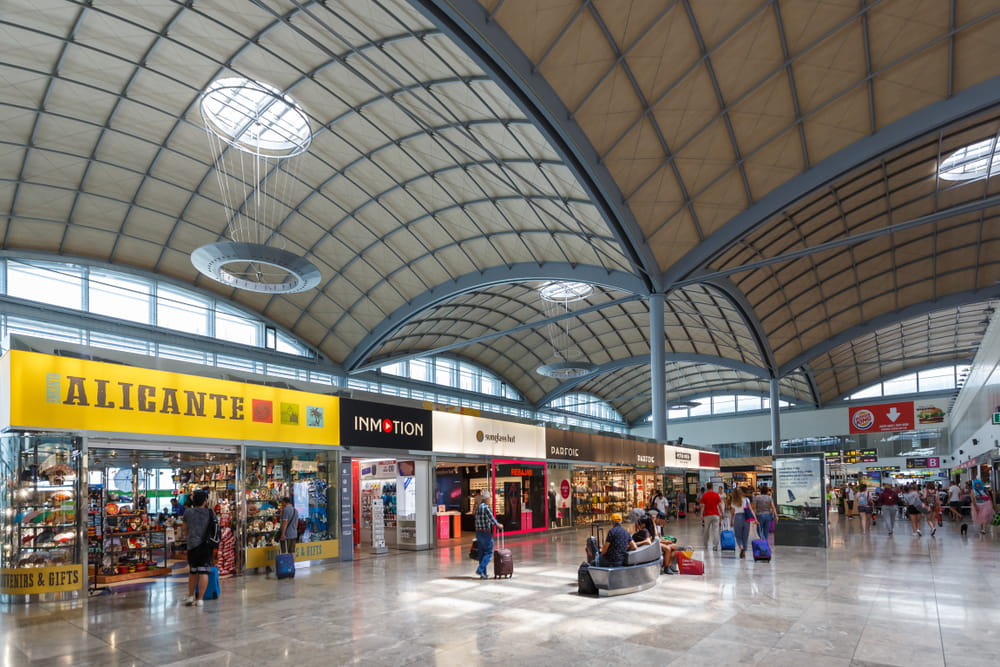
Yes – Alicante Airport definitely has shops, and quite a good selection considering its size.
After passing security, passengers enter a large commercial zone with everything from travel essentials to luxury goods. Shopping areas are concentrated around the central departures hall and gate zones.
The airport includes:
- Duty-free stores,
- Perfume and cosmetics shops,
- Fashion boutiques,
- Souvenir stores,
- Electronics and accessories,
- Bookshops,
- Convenience stores.
The main duty-free area offers alcohol, tobacco, chocolates, perfumes, cosmetics, and Spanish specialty products.
Travelers heading to the UK often ask how much duty-free they can bring back from Spain. UK duty-free allowances can change depending on customs regulations, but generally travelers entering the UK may bring limited quantities of alcohol and tobacco for personal use without paying extra tax. It is always wise to verify the latest UK customs allowances before flying.
Popular brands and retailers at Alicante Airport often include international travel-retail chains and Spanish fashion labels. Depending on the season, passengers may find stores selling sunglasses, beachwear, football merchandise, local wines, olive oil products, and Iberian ham gift packs.
For travelers with extra time before boarding, shopping is one of the main things to do at Alicante Airport, especially since the post-security area is spacious and comfortable.
Places to Eat
Alicante Airport has a wide variety of food options, ranging from quick snacks to full sit-down meals.
Yes, there are definitely places to eat at Alicante Airport, both before and after security.
Food choices include:
- Coffee shops,
- Tapas bars,
- Sandwich cafés,
- Burger restaurants,
- Pizza outlets,
- Mediterranean cuisine,
- Grab-and-go bakeries,
- Ice cream and dessert counters.
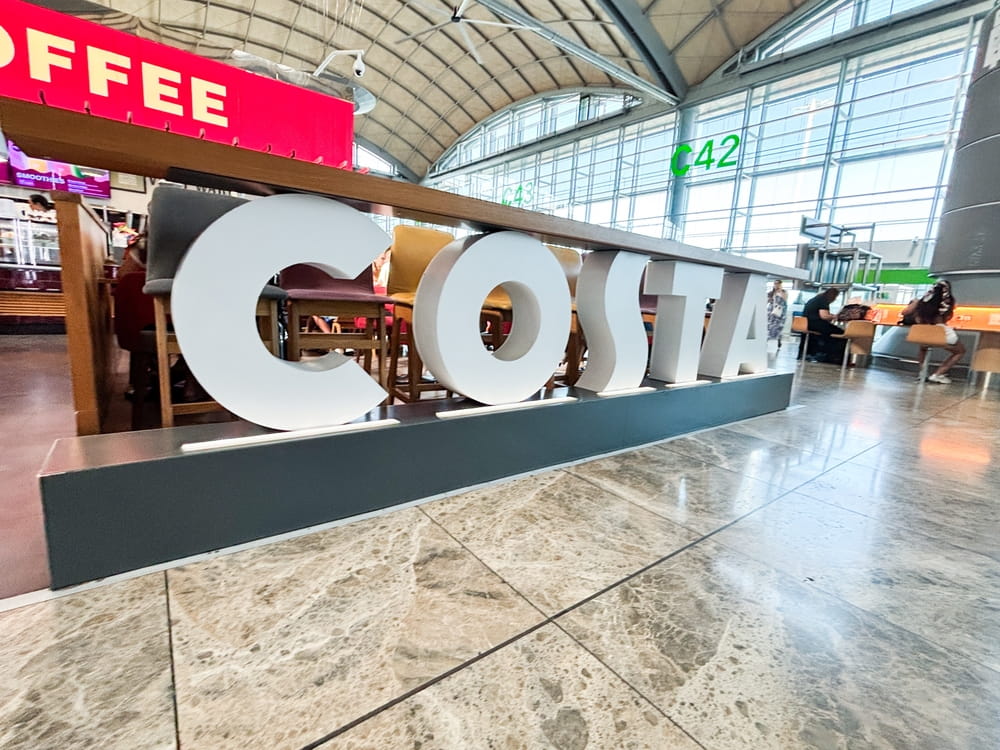
Many restaurants open early to serve departing morning flights, while others remain open late into the evening during busy travel seasons.
Passengers can find Spanish classics like bocadillos, tortilla española, jamón serrano, and pastries, alongside familiar international fast-food options.
Vegetarian and lighter meal options have improved considerably in recent years, although availability still depends on the individual outlet.
Prices inside the airport are predictably higher than in the city center, but not unusually expensive by European airport standards.
For travelers with long waits, the central departures food court area offers comfortable seating and runway views in some sections.
Transport: City–Airport and Airport–City Connections
Getting between Alicante Airport and the city center is relatively simple and affordable.
C6 Airport Bus
The most popular public transport connection is the C6 airport bus. This bus operates between the airport and central Alicante, including stops near the train station, city center, and port area.
The bus generally runs:
- every 20 min during busy daytime hours,
- less frequently late at night,
- 24 hours a day overall.
Travel time to central Alicante is usually around 20–30 minutes depending on traffic.
Passengers often ask how much the bus costs. The fare is typically only a few euros, making it the cheapest direct airport connection.
Payment methods on the C6 usually include:
- cash,
- contactless bank cards,
- sometimes mobile payment options.
Many travelers simply tap a contactless card when boarding.
Taxi Services
Taxis are available directly outside arrivals. Alicante Taxi Services provide quick transport into the city center.
Typical taxi journey times:
- 15–20 min to central Alicante;
- longer during rush hour or summer congestion.
Approximate prices:
- around €20–30 to Alicante city center;
- higher at night, weekends, or holidays.
Taxis are convenient for families, travelers with luggage, or late-night arrivals.
Tram Connections
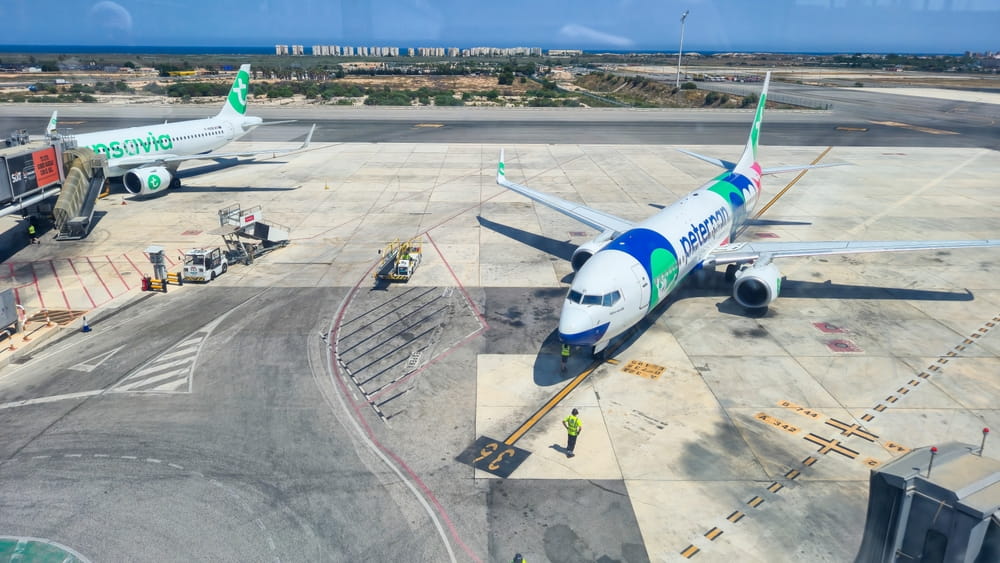
Many visitors ask whether the tram runs directly from Alicante Airport. Currently, there is no direct tram line to the airport. However, travelers can take the C6 bus into the city and connect with TRAM d’Alacant services heading toward destinations such as Benidorm, Altea, Villajoyosa, and Playa de San Juan.
Car Rental
Alicante Airport is also one of Spain’s major car-rental hubs, especially for tourists exploring the Costa Blanca.
International and local rental companies operate directly inside the arrivals area. During summer, advance booking is strongly recommended.
✈️ Need an airport transfer? Arriving late or simply want a smoother start to your stay? Book your transfer to or from Alicante Airport in advance – your driver will meet you and take you directly to the hotel at the scheduled time. Service available from €30.
At Alegria Real Estate, we believe that every journey through Alicante–Elche Miguel Hernández Airport is the beginning of new discoveries, unforgettable holidays, exciting opportunities, and meaningful moments under the Spanish sun. Whether you are arriving to explore the beauty of the Costa Blanca, searching for your dream home, or simply passing through on your next adventure, we wish you smooth travels, pleasant flights, warm Mediterranean welcomes, and countless wonderful memories ahead. May your time in Alicante be filled with sunshine, inspiration, and unforgettable experiences that will bring you back again and again.
FAQ
How long is it taking to get through security at Alicante Airport?
Security wait times vary by season and time of day. During quiet winter mornings, security may take only 10–20 minutes. In peak summer periods, queues can exceed 45 minutes or even an hour.
Is Alicante Airport easy to navigate?
Yes. Alicante Airport is relatively compact and easy to navigate thanks to its single-terminal layout, open spaces, centralized security, and clear signage in Spanish and English.
How long before my flight do I need to be at Alicante Airport?
For domestic flights, arrive around 2 hours before departure. For international European flights, arrive 2 to 3 hours before departure. During summer weekends and peak periods, closer to 3 hours is safer.
Does Alicante Airport have the new scanners?
The airport has gradually introduced newer scanners in some lanes. However, travelers should still prepare for standard EU liquid restrictions and follow airport staff instructions on the day of travel.
Are there shops at Alicante Airport?
Yes. Alicante Airport has duty-free stores, perfume and cosmetics shops, fashion boutiques, souvenir stores, electronics and accessories, bookshops, and convenience stores.
Can you buy duty free on arrival at Alicante Airport?
Yes, Aena lists an Alicante Duty Free shop in Arrivals for last-minute shopping in selected categories. Product availability and customs rules can vary, so check current airport information before travel.
Are there places to eat at Alicante Airport?
Yes. Alicante Airport has coffee shops, tapas bars, sandwich cafés, burger restaurants, pizza outlets, Mediterranean cuisine, grab-and-go bakeries, and dessert counters before and after security.
What facilities are available at Alicante Airport?
The airport includes check-in halls, security lanes, duty-free shopping zones, restaurants and cafés, family facilities, car rental desks, tourist information, currency exchange, free Wi-Fi, charging points, and VIP lounges.
What to do at Alicante Airport?
After security, passengers can shop in the commercial area, visit duty-free stores, eat in cafés or restaurants, relax in seating areas, use Wi-Fi, charge devices, or wait in the VIP lounge if available for their ticket or booking.
Does Alicante Airport have free water?
Drinking fountains are available in some areas after security, though availability may vary depending on the gate section. Many passengers still prefer buying bottled water inside the departures area.
Is tap water safe to drink in Alicante?
According to Aguas de Alicante, tap water is safe drinking water and can be drunk at no risk to health. Some travelers may still prefer bottled water because of taste or personal preference.
How long does it take to get through Alicante Airport?
Walking distances are manageable because the airport is concentrated in one main terminal structure. Security can take 10–20 minutes in quiet periods and 45 minutes or more during peak summer periods. Travel time between the airport and central Alicante is usually around 20–30 minutes by C6 bus depending on traffic.
What services does Alicante Airport offer?
Alicante Airport offers passenger services such as shops, restaurants, duty-free areas, Wi-Fi, charging points, tourist information, car rental desks, VIP lounges, drinking fountains, vending machines, comfort zones, and transport connections.